The smartphone was supposed to make parenting easier. A pacifying screen in a restaurant, an educational app for long car rides, a window into a child’s social world. But a profound and collective unease has settled in its glow. Across kitchen tables in San Francisco and Seoul, in parenting forums and school parking lots, a question is being whispered, then debated, then acted upon: What have we done? This is not a Luddite rejection of technology, but a calculated, often anxious, parental response to a world where childhood is mediated by platforms designed for maximal engagement, not healthy development.
This reaction is crystallizing into a powerful market force: the Post-Platform Parenting movement. It’s a consumer shift away from digital-first childhoods and toward what is being nostalgically, yet strategically, reframed as an "analog" upbringing. This isn't just about limiting screen time; it's a holistic reimagining of children's products, activities, and environments. It’s a booming "Anxiety Economy," where parental fears about attention spans, mental health, and lost innocence are being translated into demand for low-tech toys, offline experiences, and tools to reclaim a sense of agency. For businesses in sectors from toys and education to travel and real estate, understanding this shift is critical. You are no longer just selling to parents; you are selling them peace of mind.
"We outsourced play to iPads and connection to Instagram. Now, we're paying a premium to buy it all back."
The Roots of the Anxiety: From Convenience to Crisis
The pivot didn't happen overnight. It’s the culmination of a perfect storm of cultural and scientific realizations. The initial promise of "educational" tech gave way to alarming headlines about TikTok-induced tics, YouTube's rabbit holes, and the seminal work of researchers like Jonathan Haidt, whose book "The Anxious Generation" pins a spike in teen depression and anxiety squarely on the arrival of the smartphone and social media.
Parents, particularly Millennials and older Gen Z who grew up with the internet’s evolution, are the first generation to witness both a childhood without constant connectivity and the subsequent digital transformation. This dual perspective breeds a unique form of guilt and vigilance. They see the data:
- Studies correlating heavy social media use with depression in adolescents.
- Teachers reporting diminished attention spans and frustration tolerance in students.
- The sheer difficulty of prying a child away from a algorithmically-optimized game.
This has moved the conversation from the periphery to the core of parenting philosophy. It's no longer a debate about "a little TV"; it's about the fundamental architecture of a child's consciousness. And in the face of trillion-dollar tech companies whose business models rely on capturing attention, individual parents feel powerless. Their response? To vote with their wallets, building a parallel, analog economy.
The Analog Arsenal: Products for a Low-Tech Life
The most visible manifestation of this trend is in the resurgence and reinvention of physical products. This isn't merely a throwback; it's a sophisticated market segment driven by specific parental desires for sensory engagement, open-ended play, and durability.
1. The "Un-Smart" Phone and Digital Boundaries
At the apex of parental anxiety is the smartphone itself—the gateway to an unregulated digital world. The solution emerging isn't just stricter rules, but different hardware. Sales of "dumb phones" or "feature phones" are rising, with companies like the Light Phone (USA) leading a deliberate design movement. These devices, often with e-ink screens, do only the essentials: call, text, maybe maps and a music player. They are sold explicitly as "tools, not toys," offering safety and connectivity without the bottomless app ecosystem.
Similarly, controlled smartwatches for kids (like Gabb or TickTalk) that allow for location tracking and limited communication, but no open internet browsing, are seeing explosive growth. The value proposition is clear: Give parents control and children a respite from the social-performance pressure of smartphones. The business model capitalizes on subscription services for cellular connectivity, creating recurring revenue from parental anxiety.
2. The Premium of "Real" Play: Wooden Toys and Open-Ended Kits
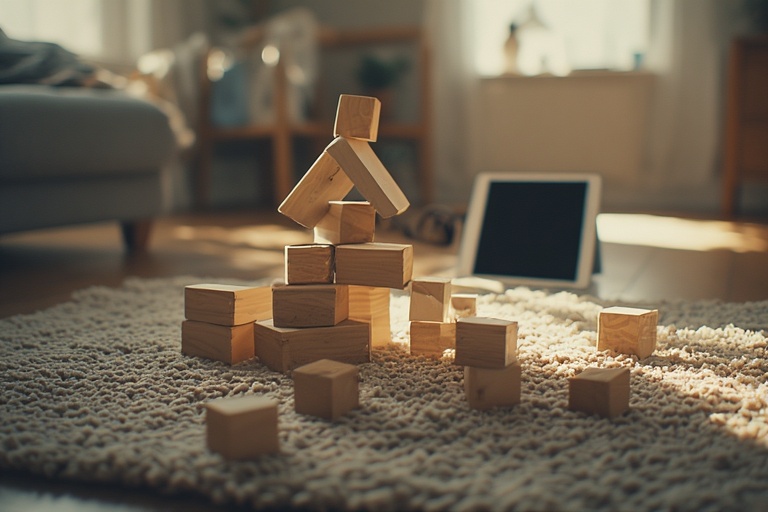
Walk into any boutique children's store in London or Melbourne, and you'll see a stark aesthetic: natural wood, muted colors, and an emphasis on simplicity. Brands like Lovevery (USA), Grapat (Spain), and Grimm's (Germany) have built empires on curated, age-based "play kits" featuring blocks, stacking toys, and art supplies that foster imagination and motor skills. Their marketing language is a direct counter to digital play: "screen-free," "Montessori-inspired," "developmentally supportive."
The financial model is compelling. Instead of a $4.99 app, parents pay $80+ for a subscription box of wooden toys every few months. They are not just buying objects; they are buying a curated developmental pathway and, crucially, an identity as an intentional, thoughtful parent. This sector leverages direct-to-consumer (DTC) channels and powerful community marketing through parenting influencers on Instagram—ironically using the very platforms they critique to sell the alternative.
3. The Rebirth of Print and Tangible Media
In a world of streaming, there's a growing market for physical children's media. Subscription services for high-quality, print-based children's magazines (Okido from the UK, Kazoo from the USA) are thriving. Vinyl records for children's music are experiencing a niche revival. The appeal is tactile, shared, and finite—a clear beginning and end, unlike an infinite YouTube playlist. These products offer a focused, communal experience: sitting together to read, dancing to a side of a record.
Beyond Products: The Experience and Service Ecosystem
The Post-Platform movement extends far beyond the playroom. It's fostering a parallel economy of services and experiences designed to facilitate analog living.
1. "Unplugged" Activity Subscriptions and Camps
The demand for structured, screen-free time has created booming businesses. Companies are offering curated "adventure boxes" that prompt outdoor exploration. "Wilderness" or "forest school" programs, which originated in Scandinavia and are now proliferating in North America, offer full-day, outdoor, play-based education where climbing trees and building mud kitchens are the curriculum. Summer camps promoting "digital detox" can charge a significant premium, with waitlists often years long in affluent areas.
The value proposition is two-fold: for the child, immersive, skill-building play; for the parent, the precious gift of time where they are not the "screen-time police," and the assurance their child is developing resilience and social skills offline.
2. Real Estate and Community Design
This trend is physically shaping where families choose to live. Suburban developments and high-end apartment complexes are now advertising "analog amenities": expansive community gardens, workshops with real tools, designated "adventure playgrounds" with loose parts (tires, planks, rope) instead of prescribed plastic structures, and walking trails that connect to schools. The real estate sell is not just square footage; it's a ready-made environment for an analog childhood. In urban centers, families are seeking out neighborhoods with robust, walkable "main streets" and easy access to parks and libraries—infrastructure that facilitates spontaneous, offline life.
3. The "Slow Parenting" Advisory Complex
Anxiety creates a market for guidance. A new class of parenting coaches, consultants, and authors has emerged, specializing in "digital wellness" and "slow parenting." They offer everything from one-on-one family digital audits to workshops on setting up a home "tech covenant." Newsletters and podcasts, like Your Parenting Mojo or Screen Time Action Network, analyze the latest research and offer practical scripts for talking to schools or grandparents. This is the meta-layer of the Anxiety Economy: profiting from the need to navigate the very complexity it critiques.
The Strategic Playbook: Navigating the Analog Renaissance
For businesses, from startups to established brands, this movement presents both a disruption and a massive opportunity. Here’s how to strategically engage with the Post-Platform Parent.
1. Authenticity is Non-Negotiable (and Fragile)
This consumer segment is highly educated, skeptical, and adept at spotting hypocrisy. Marketing a plastic, battery-operated toy as "screen-free" will backfire. The commitment to analog principles must be woven into the product's DNA—its materials, its design intent, and its supply chain. Storytelling is paramount: the origin of the wood, the philosophy of open-ended play, the founder's own parenting journey. Transparency builds the trust that mitigates anxiety.
2. Sell Outcomes, Not Just Objects
Parents aren't buying a $120 set of wooden blocks; they are buying confidence, cognitive development, peaceful play, and a reclaimed childhood. Your marketing and product design must articulate these emotional and developmental outcomes. Frame your product as a tool to achieve a parental goal: "Foster independent play," "Spark creative problem-solving," "Create calm bedtime routines." You are in the business of selling solutions to parental pain points, of which digital overwhelm is now primary.
3. Facilitate, Don't Isolate
The smartest businesses in this space understand that the goal isn't to create a tech-free bunker, but to empower parents to build healthier relationships with technology. This is why the most successful "dumb phone" companies have sleek design and thoughtful UX—they are facilitating connection, not deprivation. Similarly, toy companies can offer resources on "how to play" with their open-ended toys, helping parents who may feel ill-equipped to guide non-digital play.
4. Build Community, Not Just a Customer Base
The journey away from platform-driven childhoods can feel lonely. Brands that can foster real-world or dedicated online community spaces (with clear, enforced guidelines) will win fierce loyalty. Host local playgroups, create hashtags for sharing analog adventures, and facilitate parent meet-ups. By creating a tribe around your brand, you provide social validation, which is a powerful antidote to anxiety.
The Tensions and The Future
This movement is not without its contradictions and challenges. It risks exacerbating class divides, as wooden toy subscriptions and forest schools carry high price tags, making "intentional" parenting a luxury good. There's also the irony of using Instagram—a prime source of social comparison anxiety—to promote a slower, less comparative lifestyle.
Furthermore, the definition of "good" parenting is constantly shifting. The pressure to be perfectly analog can itself become a new source of anxiety, a phenomenon some call "Pinterest Pressure" for the Montessori generation.
Yet, the underlying driver is robust and growing. The tech genie cannot be put back in the bottle, but it can be negotiated with. The future of this market lies not in pure rejection, but in thoughtful integration. We will see more products and services that help families set digital boundaries gracefully, that use technology as a scaffold to enable real-world experiences (e.g., apps that identify birds or stars, then put the phone away), and that offer hybrid models acknowledging the necessity of digital literacy while fiercely protecting space for unstructured, unmediated exploration.
The Post-Platform Parenting movement reveals a fundamental truth: in an age of algorithmic abundance, scarcity has become the ultimate luxury. Quiet, boredom, mud-stained knees, and the unrecorded moment are the new status symbols. Businesses that can authentically curate, protect, and deliver these scarce experiences are not just tapping into a trend; they are building a fortress in the Anxiety Economy, offering havens of humanity in a digitally saturated world.