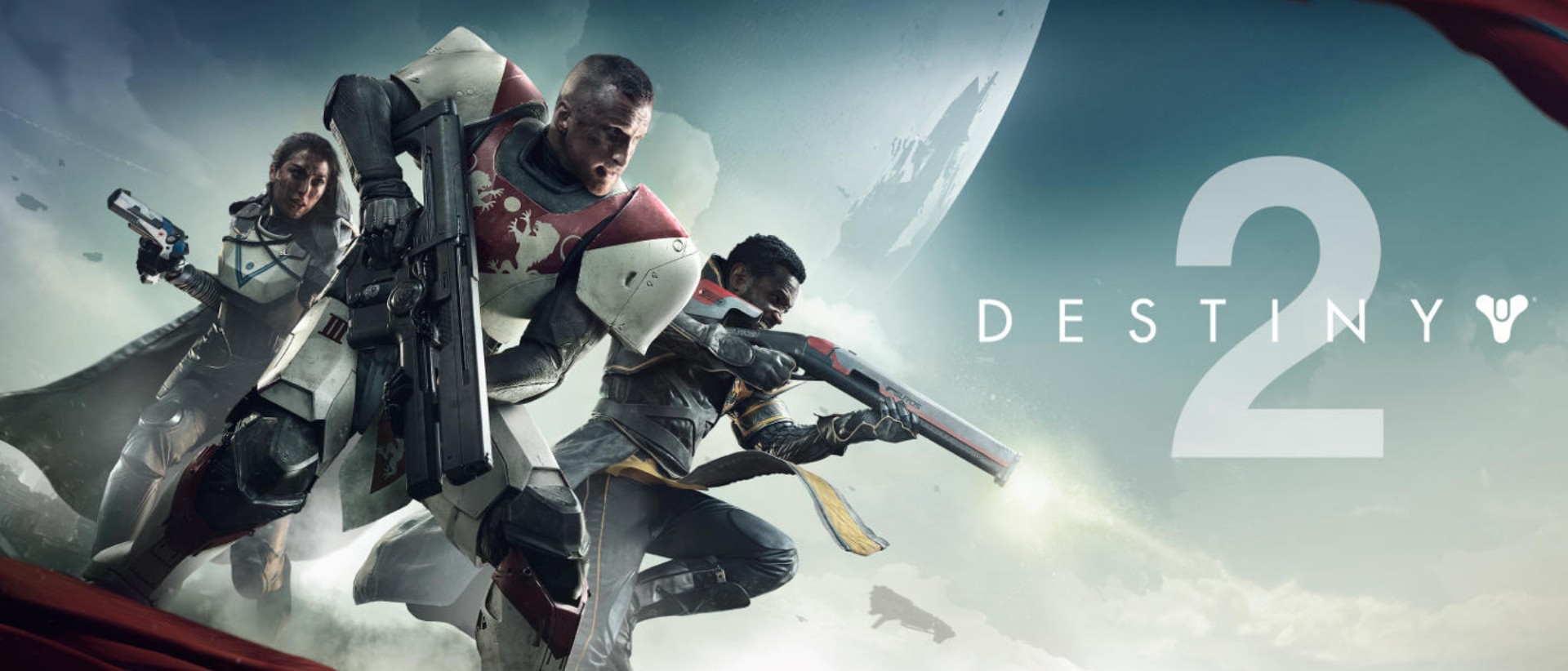
The walls between our favorite fictional universes, once thought to be fundamental laws of narrative physics, are crumbling. We’ve seen it in flashes: Fortnite has become a chaotic singularity where Kratos can emote next to Spider-Man. But the recent announcement from Bungie regarding *Destiny 2*’s “Renegades” event marks a different kind of breach. This isn't a celebrity guest appearance in a battle royale lobby. This is a deep, sustained, and frankly strange experiment in grafting the aesthetic and lore of Star Wars—the most monolithic
sci-fi franchise in history—onto the meticulously crafted, decade-old universe of Destiny. It’s a move that has sparked equal parts exhilaration and existential dread among fans, and it represents one of the most audacious crossover plays in modern gaming.
At first glance, the pairing seems logical. Both are space operas. Both feature enigmatic cosmic powers, ancient civilizations, and a focus on weaponry that feels iconic. But delve deeper, and the philosophical chasm is vast. Destiny’s universe is one of paracausal mystery, where Light and Darkness are neutral forces wielded by competing philosophies. Star Wars is built on a foundational binary of good and evil, the Force being a spiritual energy with a clear moral compass. “Renegades” isn’t just dropping a lightsaber into the game; it’s attempting to integrate the very *feel* of Star Wars—its rusted hulls, its blaster sounds, its specific brand of adventure—into Destiny’s ecosystem. The risk isn’t of it being unpopular; the risk is of it feeling like a profound violation of tone.
Beyond the Skin-Deep: The Integration Challenge
Other games, notably Fortnite and *Call of Duty*, have normalized the cosmetic crossover. You can play as Darth Vader in *Call of Duty*, but it’s purely a visual shell—the gameplay remains rooted in modern military combat. The “Renegades” experiment, as detailed by Bungie, suggests something more immersive. We’re talking about weapons that don’t just look like Star Wars blasters but might *behave* with their distinct charge-up and firing mechanics. We’re talking about sparrows (Destiny’s speeder bikes) that hum with the iconic sound of a T-47 airspeeder. This is a crossover that seeks to implant the sensory DNA of one franchise into the gameplay loop of another.
This approach is fraught with peril. For Destiny’s loyal player base, the game’s feel—the “gameplay sandbox”—is sacrosanct. The specific kick of a Hand Cannon, the arc of a Grenade Launcher’s projectile, these are carefully balanced pillars. Introducing weapons that operate on completely different principles, even temporarily, could feel disruptive or, worse, like a cheap parody. Bungie’s challenge is to make these items feel authentically Star Wars *without* making the Guardian holding them feel like they’ve stepped out of their own story. It’s a tightrope walk over a canyon of fan expectation.
"This isn't a collab; it's a translation. We're not porting models. We're asking, 'What would a Star Wars blaster feel like in the hands of a Warlock?' The answer has to honor both sides," commented a senior game designer from a rival studio, speaking on the technical ambition.
The experiment mirrors a trend seen in other media, particularly with Disney’s approach to its own properties. The Marvel Cinematic Universe is a masterclass in blending distinct tones—the cosmic weirdness of *Thor* with the political thriller of *Captain America: The Winter Soldier*. But even that happens within a shared narrative continuity. What Bungie is attempting is more akin to a major novel series suddenly incorporating chapters written in the style of another author’s famous world, as a limited-time event. The precedent is simply not there at this scale.
The Live-Service Crucible: Where Fan Service Meets Franchise Integrity
The “Renegades” event is only possible because *Destiny 2* exists as a live-service game, a persistent world that evolves weekly. This model demands constant novelty to retain players. Seasonal stories and new gear are the lifeblood. In this context, a crossover of this magnitude is the ultimate content injection, a shock to the system designed to pull lapsed players back in and generate weeks of social media buzz and streaming content.
But live-service games also cultivate deep, narrative investment. Players have spent years understanding the rules of Destiny’s reality. A poorly integrated crossover can feel like breaking the fourth wall, shattering immersion for the sake of a marketing beat. The companies involved—Bungie, under Sony, and Disney, holder of the Star Wars IP—are clearly betting that the sheer delight of the spectacle will override any tonal dissonance. They are testing whether, in the age of the shared digital experience, the joy of recognition (“I’m holding a DL-44!”) is more powerful than the sanctity of a self-contained canon.
| Crossover Type | Example | Integration Level | Risk Factor |
|---|---|---|---|
| Cosmetic Shell | Master Chief armor in *Fortnite* | Purely visual, no gameplay impact. | Low. It's fun dressing, easily ignored. |
| Thematic Game Mode | *Call of Duty*'s "The Boys" event | Temporary mode with unique rules & looks. | Medium. Contained, but can feel gimmicky. |
| Deep Mechanical Integration | *Destiny 2: Renegades* (Experiment) | New weapon behaviors, sounds, & lore blending. | Very High. Risks altering core game feel and narrative coherence. |
| Full Universe Mashup | *Kingdom Hearts* series | Narrative and gameplay built on crossover from the ground up. | Managed at design stage. Core identity *is* the crossover. |
A New Paradigm or a Cautionary Tale?
The success or failure of “Renegades” will send a powerful signal to the entire industry. If it’s a hit, we can expect other flagship live-service games—*Warframe*, *Final Fantasy XIV*, even *World of Warcraft*—to explore similarly deep crossovers, potentially leading to a landscape where major IPs are in constant, swirling conversation. The lines between franchises would become permanently porous.
If it fails—not in player count, but in perceived respect for the source materials—it could reinforce a more conservative approach. Crossovers might retreat to the safe space of cosmetics only. The experiment is a test of player maturity and designer finesse. Can an audience hold two conflicting truths in their mind at once: that their Guardian is a hero of the Light, and that they can also, for a few weeks, wield the weapon of a scoundrel from a galaxy far, far away?
Ultimately, “Renegades” is more than an in-game event. It’s a philosophical question posed with millions of dollars of development and licensing behind it. In an era where audiences are fluent in multiple fictional lexicons, do we still need the walls between worlds? Or is the greatest power fantasy of all the ability to finally, definitively, mix our toys together? Bungie and Disney have placed their bet. Soon, every Guardian turned part-time Rebel will deliver the verdict.
- Tonal Alchemy: The highest hurdle is blending Star Wars' classic adventure feel with Destiny's mysterious, post-apocalyptic grandeur.
- Gameplay Sanctity: Introducing new weapon mechanics is a higher-risk move than cosmetic changes, potentially disrupting core combat balance.
- Live-Service Leverage: The model allows for bold, temporary experiments that would be impossible in a static, single-player game.
- Industry Bellwether: The event's reception will guide how other narrative-heavy live-service games approach major crossovers.
The “Renegades” event may be a limited-time affair in the world of Destiny 2, but its implications are permanent. It challenges a foundational rule of dedicated fandom: that the stories we love exist in protected spaces. Whether this experiment is remembered as a brilliant breakthrough or a fascinating misstep, it undeniably begins a new, stranger chapter for what our biggest games are allowed to be.


