Let us talk about the shoe that fashion people defend and everyone else questions. The clog. You know the one. Wooden sole. Chunky silhouette. The shoe your mom wore in the garden that you swore you would never be caught dead in. Well, guess what. Halle Berry just wore them. Sarah Jessica Parker wears them constantly. Jennifer Garner reaches for them like clockwork. Olivia Munn and Kendall Jenner are on the list too.
Either everyone has lost their minds, or we have been wrong about clogs this whole time. Spoiler: it is the second one.
What Halle Berry Wore and Why It Worked
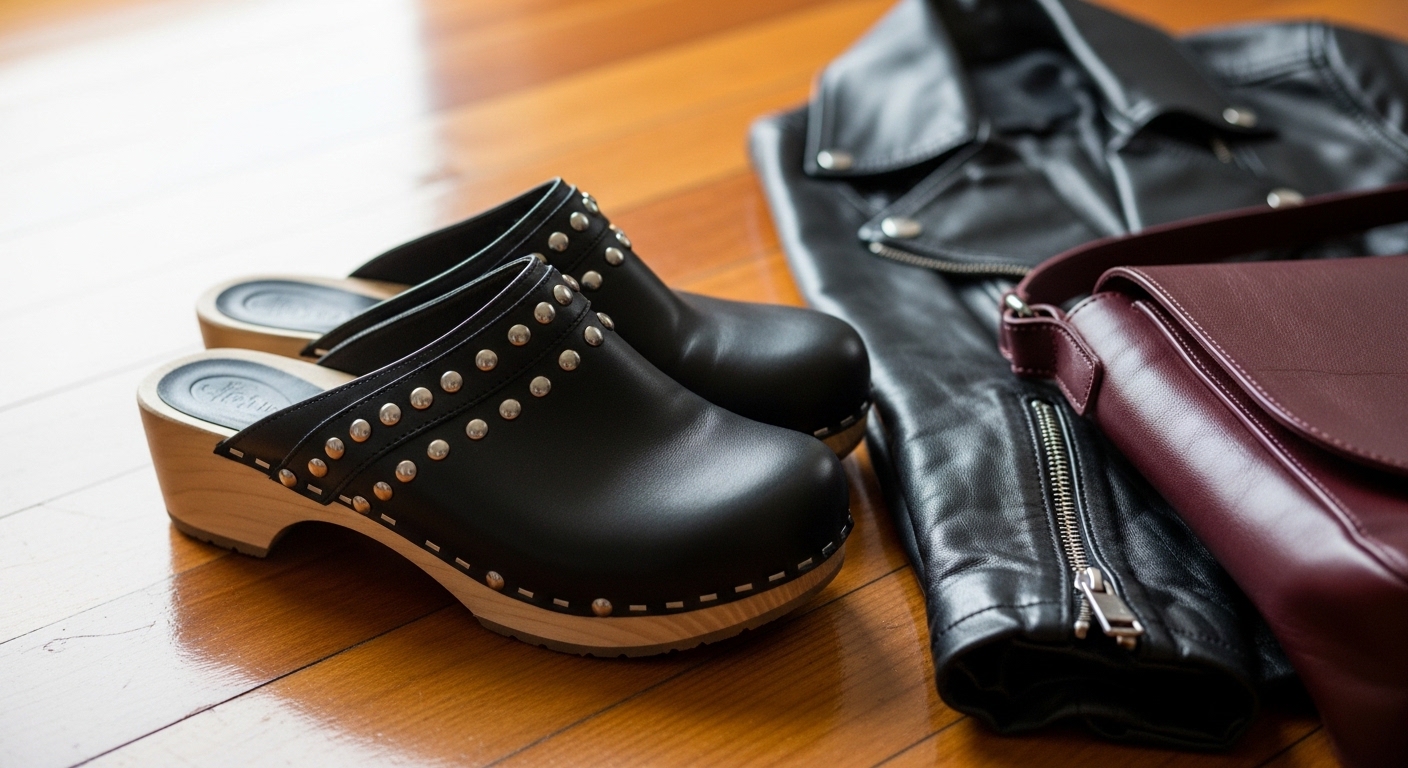
The actress was spotted in what can only be described as the ultimate comfort uniform. A dark green sweat set—slightly oversized zip-up hoodie and fitted pants—layered under a leather jacket with a cinched waist and roomy pockets. A large burgundy leather bag completed the carry-everything element. And on her feet: black studded clogs.
On paper, this should not work. Sweats and a leather jacket? Fine. Adding clogs? That feels like one step too far into "I gave up" territory. But seeing it, the combination makes sense. The clogs add a grounding element that sneakers would not provide. They have weight. They have presence. They say "I am comfortable but I still thought about this outfit."
That is the trick with clogs. They look accidental but feel intentional. And that tension is exactly what makes them work.
Why Clogs Keep Coming Back
Clogs have been a street-style favorite for years, long before Halle Berry joined the club. Sarah Jessica Parker has been photographed in them more times than anyone can count, usually paired with the kind of eclectic, layered looks that only she can pull off. Jennifer Garner wears them for errands, school pickups, and the general chaos of mom life. Olivia Munn and Kendall Jenner have been spotted in them too.
So what is the appeal? Three things.
First, ease. Clogs slip on and off without bending down, without laces, without any of the fuss that other shoes demand. For anyone who has ever tried to wrangle a toddler while tying sneakers, this feature alone justifies the purchase.
Second, support. Quality clogs are designed with contoured footbeds that provide arch support most sneakers lack. The wooden sole is rigid, yes, but the insole molds to your foot over time. People who stand all day—teachers, nurses, chefs—have known this secret for years.
Third, the cool factor. Clogs have a nonchalance that other shoes cannot replicate. They are not trying to impress anyone. They are not sleek or sexy or statement-making in the way a bright sneaker or a strappy sandal might be. That lack of effort is precisely what makes them stylish. You look like someone who threw on shoes to go do things, not someone who spent twenty minutes deciding.
The Divisive Part: You Either Get It or You Do Not
Not everyone will love clogs. That is fine. The shoe has always been divisive. Some people see a wooden sole and think "carpenter" or "grandma" or "why." Others see the same shoe and think "effortless" and "practical" and "finally, something that does not hurt my feet."
The divide usually comes down to how you prioritize comfort versus polish. If you believe shoes should complete an outfit, clogs may feel too casual, too clunky, too distracting. If you believe shoes should serve you first and look good second, clogs make perfect sense.
Here is the thing. Fashion has been moving toward the second camp for years. Sneakers with dresses. Birkenstocks with everything. The pandemic accelerated the shift, but it was already happening. People realized they did not want to suffer for style anymore. Clogs are just the next stop on that train.
And once you see Sarah Jessica Parker—the woman who made Manolo Blahniks a cultural phenomenon—choosing clogs for her everyday life, you have to admit something is happening.
How to Wear Clogs Without Looking Like You Gave Up
If you are ready to try clogs but worried about looking like you raided your grandmother's garden shed, here is how to make them work.
Start with the silhouette. Chunky is good. Too chunky can overwhelm. Look for clogs with a visible wooden sole but a streamlined upper. Leather, suede, or the studded version Halle Berry wore all work well. Avoid anything with excessive embellishment or bright colors until you know you like the silhouette.
Pair them with the right pants. Cropped jeans or trousers that hit above the ankle show off the shoe without competing with it. Wide-leg pants can work if the hem clears the clog—you do not want the fabric pooling on top of the wood. Leggings and fitted sweatpants, like Halle Berry wore, create a clean line that lets the clog stand out.
Consider the rest of your outfit. Clogs have visual weight. Balance them with pieces that are not overly delicate. A flowy sundress can work, but the contrast is extreme. Leather jackets, structured coats, and chunky knits all pair more naturally. Think "comfortable but put together" rather than "dressed up."
Do not overthink accessories. Clogs are not the star of the outfit. They are the supporting actor. Let your bag, your jacket, your jewelry do the talking. The clogs just need to be there, doing their job, keeping you comfortable while you go about your day.
Clogs for Every Version of You
The beauty of clogs is that they work across contexts, if you let them.
For the mom on the go: This is the target audience. Clogs handle playground gravel, grocery store linoleum, and carpool line pavement with equal ease. They slip off at the door when you need to run inside without shoes. They support your arches during the hours you spend on your feet. They look fine with leggings, jeans, and the occasional moment you remember to wear real pants.
For the creative professional: In offices with relaxed dress codes, clogs read as intentional and artistic. Pair them with cropped wide-leg trousers, a simple sweater, and interesting jewelry. You will look like someone who understands fashion without being governed by it.
For the weekend warrior: Clogs are made for Saturday errands, Sunday brunch, and everything in between. They are the shoe you reach for when you want to be comfortable but cannot bring yourself to wear the same sneakers for the fifth day in a row.
For the trend curious: Try a pair from a budget-friendly brand first. See if you like the silhouette, the weight, the way they feel. If you love them, invest in a higher-quality version. If you do not, you are out fifty dollars instead of two hundred.
What to Look for When Buying Clogs
Not all clogs are created equal. The difference between a pair you reach for constantly and a pair that collects dust in your closet comes down to a few key factors.
The footbed matters most. Look for contoured support, not a flat piece of wood. Quality clogs have a slight arch, a heel cup, and enough padding that you can stand in them for hours. If the footbed feels like a board, keep looking.
The upper should be flexible. Leather and suede mold to your foot over time. Synthetic materials do not. If you plan to wear clogs often, spend the extra money on natural materials.
The heel height varies. Traditional clogs have a visible heel, usually one to two inches. Lower profiles exist for those who want less lift. Try both and see what feels stable. Clogs should not make you walk differently than you would in bare feet.
The studded version Halle Berry wore adds visual interest without changing the clog's essential nature. If you want a pair that stands out, details like studs, buckles, or contrasting stitching give you personality without sacrificing comfort.
Why Spring Is the Perfect Time for Clogs
Spring is transitional. Too warm for boots, too cool for sandals. Clogs fill the gap perfectly. They provide more coverage than open-toe shoes but breathe better than leather boots. The wooden sole does not trap heat the way rubber or synthetic materials do.
Spring also brings rain. Clogs handle wet ground better than sneakers or flats. The wooden sole lifts you above puddles. The leather or suede upper resists light moisture. For the unpredictable spring weather that swings from sunny to stormy in an hour, clogs are surprisingly practical.
And spring is when fashion loosens up. Heavy winter layers give way to lighter jackets, cropped pants, and the kind of relaxed dressing that clogs complement perfectly. The shoe that looks out of place in December—too light, too exposed—fits right in during April.
The Bottom Line on the Divisive Shoe
Halle Berry, Sarah Jessica Parker, and Jennifer Garner cannot all be wrong. Neither can the designers, editors, and stylists who have championed clogs for years. At a certain point, you have to accept that the shoe people love to debate is actually just a really good shoe.
Clogs are not for everyone. No shoe is. But if you value comfort, if you appreciate ease, if you have ever looked at your sneakers and wished for something with a little more character, clogs are worth a try. Start with a neutral pair. Wear them around your house. Take them on errands. See how they feel.
You might hate them. You might love them. You might land somewhere in between, reaching for them on days when nothing else feels right. That is the thing about the divisive shoe. It divides people because it asks something of them: reconsider what you think you know about style, about comfort, about the shoes that deserve a place in your closet.
Halle Berry already made her choice. Sarah Jessica Parker made hers years ago. Jennifer Garner reaches for clogs like clockwork. Now it is your turn to decide.