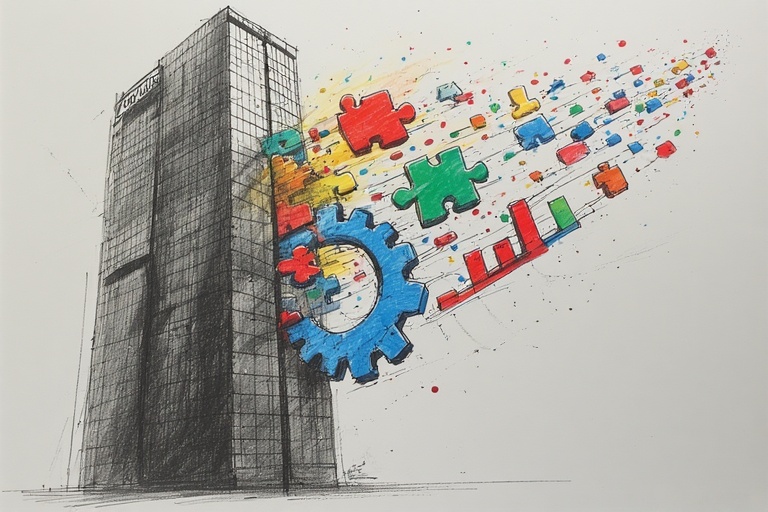
For decades, the enterprise software playbook was written by giants. Companies like SAP, Oracle, and later Salesforce and Microsoft built imposing, integrated suites—monolithic platforms promising to be the "single source of truth" for every business function from finance and HR to sales and supply chain. The sales pitch was compelling: one vendor, one contract, one system to rule them all. It promised efficiency, consistency, and reduced complexity. But for many who lived with these suites, the reality was often rigidity, bloated costs, and a frustrating "good-enough-for-everyone, perfect-for-no-one" experience.
Now, a powerful counter-trend is reshaping the very foundation of business technology. A wave of agile, focused startups is executing a strategic unbundling. They are not trying to rebuild the suite. Instead, they are surgically extracting a single function—spend management, design collaboration, candidate sourcing, social media scheduling—and perfecting it. They are selling not to the CIO’s desire for consolidation, but to the end-user’s pain point. This is the **Great Unbundling of Enterprise Software**, and it represents a fundamental shift in how businesses buy, use, and derive value from technology. For leaders, understanding this fragmentation is no longer an IT concern; it's a core strategic imperative affecting agility, innovation, and competitive advantage.
"The suite is being disassembled, not by a competitor's suite, but by a thousand passionate experts."
From Monoliths to Micro-Services: The Mechanics of Unbundling
The unbundling is made possible by the very cloud infrastructure that the giants helped popularize. In the old on-premise world, buying a new system meant massive capital expenditure, complex integration projects, and lengthy deployments. The cloud lowered these barriers, but the suite vendors still sold the dream of the integrated stack. The new niche players, however, leverage the cloud differently. They build on modern architectures (APIs-first, microservices) that make their best-in-class tools not just powerful in isolation, but inherently designed to connect.
Let’s look at a classic example: the **CRM suite**. Salesforce owns the category. But a modern sales team’s actual workflow is now often a patchwork of superior point solutions:
- They might use **ZoomInfo** or **Apollo.io** for superior lead intelligence and prospecting data, finding it more accurate and deep than Salesforce's own Data.com.
- For email outreach and sequencing, they turn to **Outreach** or **Salesloft**, which offer far more sophisticated automation, analytics, and engagement tracking for sales development reps than the core Salesforce email tools.
- Contract and proposal management might happen in **PandaDoc** or **DocuSign**, which provide a smoother, more legally robust e-signature and document tracking experience.
- All of these tools sync *back* to Salesforce, which becomes less the "system of engagement" and more the "system of record."
This pattern repeats everywhere. Companies use **Workday** or **SAP SuccessFactors** for core HR, but recruit with **Lever** or **Greenhouse**, manage performance with **Lattice**, and handle payroll with **Rippling**. The monolithic suite is becoming a back-office ledger, while the innovative, daily work happens in a constellation of specialized satellites.
Why It's Winning: The User-Led Rebellion
This shift is fundamentally user-led and bottom-up. A department head gets frustrated with the clunky, generic tool in the corporate suite. They have a budget. They find a sleek, modern SaaS product that solves their team's exact problem, often with a free trial and a credit card swipe. This "shadow IT" becomes so entrenched and productive that IT has no choice but to formalize it. The niche vendor wins because they compete on **depth, not breadth; user love, not CIO consolidation.**
The Strategic Calculus: Best-of-Breed vs. Suite
This fragmentation forces a new strategic calculus for business leaders. The old "suite vs. best-of-breed" debate is being re-litigated with new variables.
The Case for the Unbundled Stack:
- Innovation Velocity: Niche vendors move faster. Their entire existence depends on being the best at one thing. They can push updates weekly, rapidly incorporating user feedback and new technologies (like AI) specific to their domain.
- User Adoption & Happiness: Tools built for a specific persona, with intuitive design, see higher adoption and create less friction. Happy, efficient employees are a tangible ROI.
- Strategic Flexibility: You can swap out a component when something better emerges without overhauling your entire enterprise system. You are not locked into one vendor's roadmap.
- Cost (Sometimes): While the total spend on dozens of SaaS subscriptions can add up, it often starts lower and is OpEx-focused. You pay for what you use, avoiding massive shelfware licenses for unused modules in a suite.
The Enduring Case for Suites (The Rebuttal):
- Integration Debt & Data Silos: This is the biggest counter-argument. A sprawl of apps can create a nightmare of inconsistent data, broken workflows, and security gaps. The cost of maintaining dozens of API integrations is real and can overwhelm IT teams.
- Vendor Management Overhead: Negotiating 50 contracts, managing 50 renewals, and ensuring 50 vendors are SOC2 compliant is a logistical and legal burden.
- Unified Reporting: Suites promise a single dashboard for cross-functional insights (e.g., linking sales pipeline to resource planning). Recreating this with an unbundled stack requires significant data engineering.
- Negotiating Leverage: A large enterprise-wide contract with a single vendor can provide significant pricing leverage and influence over the product roadmap.
The New Power Players and Business Models
The unbundling trend has created distinct archetypes of successful companies and novel business models.
1. The "Unbundler" Startup:
These are the pure-play specialists. **Notion** unbundled collaboration from Microsoft SharePoint/Teams. **Figma** unbundled design from Adobe's Creative Suite. **Miro** unbundled digital whiteboarding. They grow by being 10x better at a specific job-to-be-done, often leveraging freemium models to drive bottom-up adoption within enterprises.
2. The "Rebundler" Platform:
Seeing the chaos of fragmentation, a new category has emerged: the unified work platform or "puzzle box." Companies like **ClickUp**, **monday.com**, and **Asana** started as project management tools but are rapidly adding features (docs, goals, CRM-lite) to become a cohesive layer over disparate tools. They don't replace your best-in-class CRM or design software; they aim to be the central workflow hub that connects them, offering a unified interface and reducing context-switching for employees.
3. The "Enabler" Infrastructure:
This is the most critical, behind-the-scenes layer. The unbundled world only works if the pieces can talk. This has fueled giants like **Zapier** and **Make** (for no-code automation), **Segment** (for customer data pipelines), and cloud platforms like **Snowflake** (for centralized data warehousing). These companies profit from the complexity they help manage, providing the glue for the fragmented stack.
4. The SaaS Management & Security Suite:
The proliferation of apps creates new problems: overspending, security risks, and compliance gaps. This has birthed a meta-market of companies like **Productiv**, **Torii**, and **BetterCloud** that help IT discover, manage, optimize, and secure their sprawling SaaS portfolio. They are the immune system for the unbundled enterprise.
The Strategic Playbook for Leaders
Navigating this new landscape requires moving from a procurement mindset to an architectural one. Here is a strategic playbook for business and technology leaders.
1. Adopt a "Composable Enterprise" Mindset
Design your business capabilities to be modular. Think of your tech stack as a set of interchangeable components (composable architecture) rather than a single, fused block. This mindset prioritizes API-first vendors and demands that any new software investment be evaluated not just on its core features, but on how well it plays with others.
2. Empower "Managed Shadow IT"
Fighting bottom-up adoption is a losing battle. Instead, create a governance framework that enables it safely. Establish a simple process for departments to evaluate and propose new SaaS tools, with clear guidelines on security (SOC2, data residency), required API accessibility, and a centralized billing review. Shift IT's role from gatekeeper to enabler and consultant.
3. Invest Heavily in Integration & Data Architecture
Your most critical strategic investment is no longer your CRM or ERP license; it's your **integration platform** (like **Workato** or **Boomi**) and your **clean, centralized data repository** (a data lake or warehouse). This is the "central nervous system" that makes the unbundled model sustainable. Without it, you are building a tower of brittle, point-to-point connections that will collapse under its own weight.
4. Rethink Vendor Management
Move from mega-deals with single vendors to a portfolio approach. Develop a standard security questionnaire and contracting framework to streamline onboarding. Consider leveraging SaaS procurement platforms like **Vendr** or **Sastrify** to gain visibility and leverage across dozens of smaller vendors. Your negotiation power now comes from data on usage and value, not just seat count.
5. Focus on Workflow, Not Software
The ultimate goal is a seamless employee and customer experience. Map out your core workflows (e.g., "lead-to-cash," "hire-to-retire") first. Then, select the combination of tools that makes that workflow most efficient and intelligent. Often, the best solution will be a "rebundler" platform orchestrating several "unbundler" specialists.
The Future: Bundles, But Different
The Great Unbundling does not mean the end of suites. It means their reinvention. The legacy vendors are responding aggressively—Salesforce has bought **Slack** and **Tableau**, Microsoft bundles **Teams** with **Office 365**. But the new bundles will look different. They will be more open, built on a platform model that actively incorporates third-party best-of-breed apps into their ecosystem (like the **Shopify App Store** model for enterprise).
The future belongs to the **orchestrator**. The winning vendor will be the one that provides the most frictionless, intelligent, and secure environment for specialized tools to connect and collaborate, whether that vendor is a legacy giant that successfully pivots or a new platform born in the cloud. For businesses, the prize is immense: a technology stack that is as agile, innovative, and focused as they aspire to be. The era of the one-size-fits-all monolith is over. The era of the bespoke, dynamic, and powerfully fragmented digital organization has begun.


