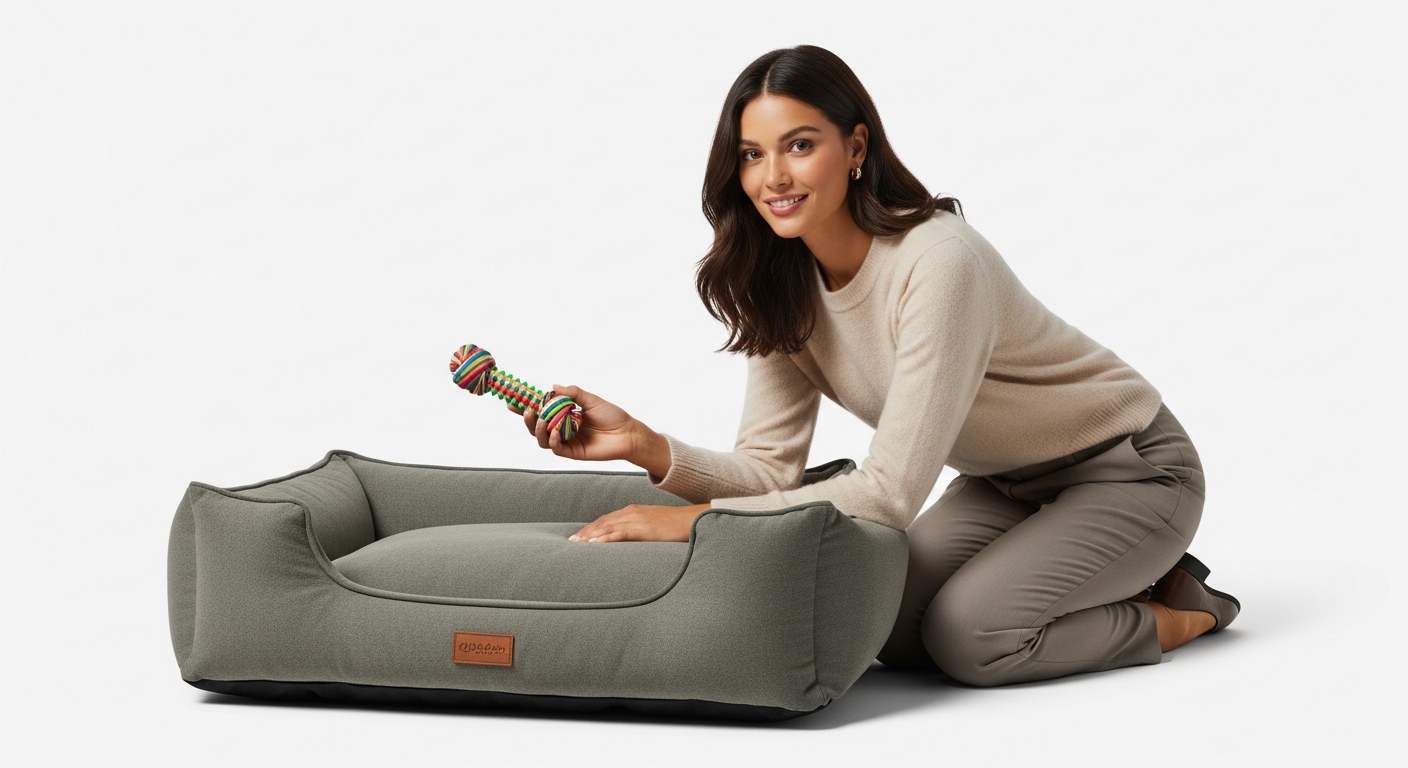
Some dogs sleep on their beds. Others declare war on them. If you have a chewer, you know the cycle. Buy a bed. Watch it get destroyed in days. Find foam chunks scattered across the floor. Throw it out. Buy another. Repeat. It is exhausting. It is expensive. And it makes you wonder if your dog is trying to send a message.
We spent one year testing so-called indestructible dog beds with real chewers. Not lab tests. Not controlled conditions. Real dogs who shred, dig, and treat bedding like a chew toy. One bed survived. Here is what we learned.
The Testing Method: Real Dogs, Real Destruction
We recruited five dogs with documented bed-destruction histories. Golden retriever who digs. German shepherd who chews corners. Husky who shreds anything soft. Labrador who seems to eat foam. Mixed breed who does all of the above.
Each dog tested one bed for three months. Then we rotated. By the end of the year, each bed had faced multiple chewers in multiple homes. We tracked damage, ease of cleaning, and whether the dog actually used the bed or avoided it.
The beds we tested ranged from $40 to $200. Materials included ripstop nylon, ballistic fabric, canvas, and reinforced Cordura. Some had zippers. Some were seamless. Some claimed to be "indestructible" on the box. Most were not.
The Winner: One Bed Survived
Only one bed made it through the full year with minimal damage. The K9 Ballistics Tough Chew Bed in the armored fabric option. After 12 months across multiple dogs, it showed some teeth marks but no punctures. No foam exposure. No seam failure. The cover was removable and washable. The bed remained usable.
What made it different? The fabric. Most beds use nylon or canvas that looks tough but frays when chewed. The K9 Ballistics material is a proprietary ballistic-style fabric that resists penetration. It is not soft. It feels almost like a heavy-duty tarp. But dogs did not seem to mind. They slept on it. They just could not destroy it.
The design helped too. No zippers. No tags. No loose threads that invite chewing. The bed was a single piece of fabric wrapped around a foam core, with a flap closure that tucked in rather than zipping. There was nothing for teeth to grab onto.
Price was $179 for the largest size. That is expensive for a dog bed. But compared to replacing $40 beds every two weeks, it paid for itself in two months.
The Runners Up: Good but Not Great
Several other beds performed well but had fatal flaws.
The Carhartt Duck Weave Bed looked tough and felt substantial. The fabric held up reasonably well. But the seams were vulnerable. One determined chewer found the edge stitching and pulled it apart within weeks. If your dog targets corners and edges, this bed will fail.
The Kuranda Elevated Dog Bed took a different approach. No foam. No fabric. Just a aluminum frame with a suspended vinyl or fabric panel. Chewers could not destroy the frame. But some dogs refused to sleep on it. The elevated design felt unstable to anxious dogs. Others chewed the fabric panel where it attached to the frame. The panel is replaceable, but replacement costs add up.
The Orvis ToughChew Bed had reinforced seams and a chew-resistant liner. It survived longer than average—about four months with a moderate chewer. But eventually, the corner stitching gave way. Orvis replaced it under warranty, which is excellent customer service. But the replacement also failed. For dogs who focus on seams, this bed is not the answer.
What Did Not Work at All
We learned quickly which beds to avoid. Any bed with a zipper is doomed. Dogs locate zippers within minutes. They pull the tab, break the teeth, and access the foam. Even beds with hidden zippers failed. If there is a seam, a determined chewer will find it.
Foam-filled beds with thin covers were the fastest to die. Some lasted less than 48 hours. The dogs did not even seem to be trying hard. They just chewed a corner, pulled out the foam, and the bed was done. Never buy a bed with exposed foam edges. It is an invitation.
Beds labeled "chew resistant" rather than "chew proof" were universally disappointing. That label means the manufacturer knows the bed will fail. They are just being honest about it. Save your money.
Elevated cots with nylon panels failed at the attachment points. The fabric itself held up, but where it connected to the frame, dogs found leverage. They chewed through the grommets and webbing. The frame remained, but without the panel, the cot was useless.
The Cost Breakdown: Cheap vs. Expensive
Let us do the math. If you buy a $40 bed every two weeks, that is $80 per month. $960 per year. A $180 indestructible bed that lasts one year saves you $780 in the first year alone. In year two, you save the full $960.
Even if the indestructible bed only lasts six months, it breaks even with the cheap bed cycle. Most of our testers found the K9 Ballistics bed lasted over a year with moderate chewers. With aggressive chewers, it still outlasted everything else by months.
The upfront cost is painful. There is no way around that. But the long-term savings are real. Plus, you stop spending your weekends cleaning foam chunks off the floor. That is worth something too.
What About Blankets and Towels?
Some owners give up on beds entirely and use blankets or towels. This is cheaper and easier to replace. But there are downsides. Blankets do not provide joint support. For older dogs or breeds prone to hip dysplasia, sleeping on hard floors is not ideal.
Blankets also get bunched up. Dogs scratch and circle, pushing the blanket into a corner. They end up sleeping on the floor anyway. Towels shred differently than beds. The fabric frays and creates strings that dogs can swallow, leading to intestinal blockages.
If your dog destroys every bed, a heavy-duty elevated cot with a chew-proof fabric panel is better than blankets. At least it keeps them off the floor. But the K9 Ballistics style bed was preferred by the dogs themselves. They slept on it more willingly than any other option.
Tips to Extend Any Dog Bed's Life
Even the toughest bed will last longer if you follow these rules.
Remove the bed when you cannot supervise. If your dog chews when bored or anxious, do not leave the bed accessible during the workday. Give it back at night when you are home. This alone doubled bed life for several testers.
Provide appropriate chew toys. Dogs chew beds because they need to chew. If you remove the bed without providing alternatives, they will find something else—your shoes, your furniture, your baseboards. Rotate toys to keep interest high.
Exercise matters. A tired dog is a less destructive dog. Several testers noticed their dogs only destroyed beds on days they did not get enough exercise. The bed was not the problem. Boredom was.
Address anxiety. Some dogs chew because they are stressed. Thunderstorms, fireworks, or separation anxiety can trigger destruction. Talk to your vet if you suspect anxiety is the cause. Medication or behavior modification might help more than any bed ever could.
Wash beds regularly. A bed that smells like your dog is more attractive to chew. A clean bed is less interesting. Plus, you want your dog sleeping on something sanitary. Washable covers are essential.
The Verdict: Is an Indestructible Bed Worth It?
If your dog destroys beds regularly, yes. The upfront cost is high, but the savings add up fast. More importantly, you stop wasting time and energy on a problem that feels unsolvable.
The K9 Ballistics Tough Chew Bed was the clear winner. It survived a full year with multiple aggressive chewers. The fabric held up. The seams held up. The dogs actually used it. At $179, it is not cheap. But it is cheaper than buying ten $40 beds that fail within weeks.
For dogs who only chew occasionally, a mid-range option like the Orvis ToughChew might work. The warranty is excellent. You can replace it when it fails. But for true destroyers, go straight to the armored fabric option from K9 Ballistics.
Your dog does not need to sleep on foam chunks and shredded fabric. You do not need to keep buying beds that fail. One bed survived a year with our testers. It can survive yours too.