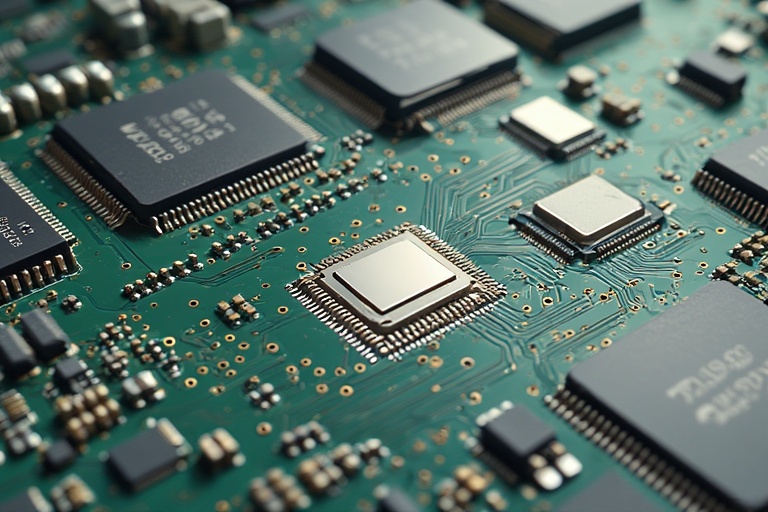
For decades, the rhythm of consumer technology was set by a familiar drumbeat. Intel would release a new generation of processors, and PC manufacturers would design their machines around its capabilities. Qualcomm or MediaTek would unveil a new smartphone chipset, and phone makers, save for one notable exception, would compete on how well they implemented it. The core intelligence of our devices was a shared, outsourced commodity. That era is decisively over. A quiet but monumental shift has occurred, with the world's most influential consumer tech companies—Apple, Google, and Amazon—making the same calculated bet: to bring the design of the most critical silicon in-house. This isn't just about better specs; it's a fundamental reclamation of control that is redrawing competitive boundaries and redefining what our devices can be.
The move is as strategic as it is technical. By designing their own application processors (CPUs), neural engines (NPUs), and image signal processors (ISPs), these companies are no longer waiting for a third-party chipmaker's roadmap to dictate their own innovation cycle. They can design the chip to fit the exact vision of the product, rather than designing the product around the limitations of a generic chip. The result is a level of hardware and software integration that was previously impossible, creating experiences that competitors using off-the-shelf components struggle to match. It's the difference between cooking with a standardized kitchen kit and designing your own oven, knives, and pans to execute a specific, visionary menu.
The Integration Advantage: Where Hardware Meets Ambition
Apple's transition from Intel processors to its own Apple Silicon in Mac computers stands as the most successful and complete example of this strategy. The M-series chips aren't universally the most powerful in raw, theoretical benchmarks for every task. Their triumph lies in their specific optimization. By controlling the entire stack—from the physics of the silicon to the code of macOS—Apple's engineers can make decisions that would be untenable for a company like Intel, which must design for thousands of different computer models. This allows for astonishing gains in power efficiency, enabling sleek, fanless laptops with all-day battery life that can also edit 8K video, a combination that eluded the Intel-based MacBook for years.
Similarly, Google's Tensor chip, powering its Pixel smartphones, is engineered with a clear priority: to accelerate the company's strengths in artificial intelligence and computational photography. While it may not top classic performance charts, it enables features like real-time language translation in the Recorder app, advanced photo unblurring, and the unique call-screening assistant. The chip is built to make Google's AI software sing, creating a differentiated "Pixel experience" that isn't just about a cleaner version of Android, but about capabilities that feel genuinely new.
"This is the end of the one-size-fits-all microprocessor. We're entering an age of 'domain-specific' silicon, where the chip is an expression of the company's primary ambition, be it AI, media, or cloud efficiency," states a semiconductor industry analyst from a firm like TechInsights.
This philosophy extends into the server racks. Amazon Web Services, the profit engine of Amazon, develops its Graviton series of server chips. The goal isn't to beat every Intel Xeon or AMD EPYC chip in every workload; it's to provide the best performance per dollar for the most common workloads running on AWS—like web serving and data processing—thereby lowering Amazon's own colossal infrastructure costs and offering cheaper, attractive instances to its customers. It's vertical integration at a planetary scale.
| Company | Flagship Custom Silicon | Primary Strategic Goal | Key Competitive Advantage Created |
|---|---|---|---|
| Apple | Apple Silicon (M-series) | Unify architecture across all products, maximize performance-per-watt. | Industry-leading battery life in powerful laptops; seamless ecosystem integration. |
| Google Tensor (Pixel phones) | Hardware acceleration for on-device AI and machine learning. | Unique AI-powered features in photography, speech, and language. | |
| Amazon | Graviton (AWS servers) | Optimize performance/cost for high-volume cloud workloads. | Lower internal costs, competitive pricing for AWS customers. |
| Samsung | Exynos (varies by region) | Control supply chain, reduce reliance on Qualcomm. | Cost control, ability to tailor specs for specific phone models. |
A Future of Specialized Brains
The trend signals a broader future where the definition of a "tech company" increasingly includes deep silicon expertise. It marks a move away from a horizontal industry, where different layers (chip design, manufacturing, device assembly, software) were handled by different specialists, toward more vertical integration. The companies that control the silicon control the pace and direction of their destiny.
For consumers, the immediate benefit is devices that work better, last longer on a charge, and offer genuinely novel features. The risk is a potential balkanization of technology, where ecosystems become even more walled as their underlying architectures diverge. Software developers may face new challenges optimizing for Apple's unified memory architecture, Google's AI cores, and Qualcomm's traditional mobile layout all at once.
The era of the anonymous, commoditized chip at the heart of our gadgets is closing. In its place is an age of silicon with a purpose, a distinct personality engineered in Cupertino, Mountain View, or Seattle. The brain of your device is no longer a generic component; it is a statement of intent, the ultimate expression of a company's ambition etched in microscopic transistors. The battle for the future of technology is no longer just fought in app stores or cloud regions; it is won and lost in the design labs where the silicon soul of our devices is born.
- Control Over Destiny: In-house chip design frees companies from third-party roadmaps, aligning silicon directly with product vision.
- Integration is King: The deepest innovation now happens at the intersection of custom hardware and proprietary software.
- The Foundry Dependency: While design is brought in-house, manufacturing reliance on TSMC creates a new global pinch point.
- Disruption of Incumbents: The move forces traditional chip giants like Intel and Qualcomm to reinvent their value proposition.
As we look at the sleek device in our hand or the powerful laptop on our desk, the revolution is invisible, buried beneath layers of metal and code. But its impact is palpable in every swift task, every long-lasting charge, and every feature that feels like a glimpse of tomorrow. The giants of tech have looked inside the black box and decided the most important thing they can build is the box itself.


