If you have been on social media recently, you have probably seen the claims. Bill Gates is spraying something into the sky. Artificial clouds are falling over your garden. Heavy metals are accumulating in your soil. The comments sections are filled with fear, confusion, and a lot of conflicting information.
Here is what is actually happening. Here is what the science says. And most importantly, here is what you can do to protect your home and garden regardless of what is or is not in the air.
The Claims vs. The Reality
The posts circulating across platforms like X, Facebook, and TikTok make several assertions: that Bill Gates is funding weather modification programs, that aluminum and barium are being sprayed from aircraft, that these substances are accumulating in soil and water, and that this explains everything from respiratory issues to failing gardens.
The reality is more complicated—and less conspiratorial—than the memes suggest.
Bill Gates has indeed funded research into solar geoengineering. The Stratospheric Controlled Perturbation Experiment (SCoPEx) at Harvard University, which Gates has supported, studies the feasibility of spraying tiny particles of calcium carbonate—essentially limestone dust—into the upper atmosphere to reflect a small fraction of sunlight back into space. The goal is to understand whether such techniques could temporarily slow global warming while the world transitions away from fossil fuels.
This is not weather control. It is not creating rain or stopping rain. It is atmospheric reflectivity research—studying whether we can mimic the cooling effect that large volcanic eruptions naturally produce when they spew sulfur dioxide into the stratosphere.
The calcium carbonate proposed for such experiments is non-toxic. It is the same compound found in chalk, antacid tablets, and many dietary supplements. It is not aluminum. It is not barium. It is not a heavy metal.
There is no evidence tilldate that large-scale spraying of any substance is currently happening. SCoPEx's planned small-scale test flights faced delays and community opposition; as of 2026, no significant atmospheric release has occurred. The idea that aircraft are regularly dumping aluminum or barium across populated areas is not supported by any credible scientific or government data.
So why do people believe it? Because the line between legitimate research and conspiracy theory has become dangerously blurred—and because many people have genuine reasons to distrust institutions that have misled them before.
The Vaccines Connection: Why Distrust Runs Deep
To understand the current anxiety, you have to go back to the early 2000s. Bill Gates, through the Bill & Melinda Gates Foundation, became one of the world's largest funders of vaccine development and distribution. The foundation's focus on childhood immunization in developing countries was widely praised by global health organizations. But it also made Gates a target.
The distrust was not entirely irrational. Pharmaceutical companies have a long history of unethical practices. The Tuskegee syphilis study, where Black men were denied treatment for decades. The 2004 withdrawal of Vioxx after it was linked to thousands of heart attacks. The opioid crisis, fueled by companies that knew the risks and marketed anyway. When you combine that history with a billionaire using his wealth to influence global health policy, suspicion is not surprising—even when the intentions are good.
By the 2010s, anti-vaccine movements had latched onto Gates as a central figure. False claims circulated that he wanted to reduce the global population through vaccines. That he was using immunization programs to implant tracking devices. That his foundation was a front for eugenics. None of these claims had any basis in fact, but they spread rapidly across emerging social media platforms.
The distrust deepened during COVID-19. Gates spoke publicly about the need for rapid vaccine development and distribution. He warned that future pandemics were likely. Conspiracy theorists interpreted these statements as admissions of intentional creation or control of the virus. When mRNA vaccines were developed and distributed at unprecedented speed, many who already distrusted Gates saw confirmation of their fears.
Now that same distrust has attached itself to geoengineering research. The pattern is consistent: Gates funds something that sounds futuristic and involves science most people do not fully understand. Social media fills the gaps in understanding with speculation. The speculation becomes assertion. The assertion becomes belief.
None of this means the anxiety is invalid. When people feel that decisions affecting their health are being made by distant institutions without their consent, fear is a rational response—even when the specific claims are not accurate.
What Is Actually in the Air We Breathe?
If the aluminum and barium claims are not supported by evidence for geoengineering programs, what explains the real particles in our air?
The answer is less dramatic but more immediate. Everyday air pollution from industrial activity, vehicle emissions, agricultural burning, and construction contains a complex mixture of particulate matter—including aluminum, barium, and hundreds of other elements. These come from coal-fired power plants, diesel engines, brake pads, tire wear, and natural soil dust.
Aluminum is the third most abundant element in the Earth's crust. It is naturally present in soil, water, and air. Barium occurs naturally in many minerals and is also released by industrial processes. The difference between natural background levels and concerning contamination is a matter of concentration—and that concentration varies enormously by location.
If you live near a major highway, an industrial facility, or an agricultural area where pesticide spraying is common, the particulate matter in your air will be higher and more complex than in rural or suburban areas with less activity. This is not new. It is a long-standing environmental justice issue that disproportionately affects lower-income communities and communities of color.
The current wave of concern about geoengineering is overlaying a real problem—air quality—with a speculative one—intentional atmospheric spraying—and in the process, confusing the causes and solutions.
What Science Actually Says About Aluminum and Health
Aluminum is a neurotoxin at high doses. This is established science. Workers in aluminum smelting industries have shown higher rates of neurological impairment. People with kidney disease who cannot excrete aluminum effectively can accumulate toxic levels.
But the dose makes the poison. Aluminum is present in many everyday items: cookware, antiperspirants, food additives, and drinking water from natural sources. The body typically excretes aluminum efficiently. The concern arises when exposure exceeds the body's ability to clear it—which is rare in the general population without occupational or medical factors.
Barium is similarly dose-dependent. Small amounts are present in many foods, particularly nuts, seaweed, and fish. At high concentrations, barium compounds can affect the nervous system and cardiovascular function. Again, the key question is exposure level, not presence or absence.
For the average person, the greater concern is not a secret spraying program but the cumulative load of all environmental exposures—industrial pollution, pesticide residues, household chemicals—and whether your body's detoxification systems are functioning well enough to handle it.
That is where the conversation should focus: not on speculative sources, but on measurable realities and practical protections.
How to Protect Your Home and Garden
Regardless of what you believe about geoengineering, there are concrete steps you can take to reduce your family's exposure to airborne particulates and soil contaminants. These measures address the real pollution that affects air quality—and they also provide peace of mind for those concerned about less documented sources.
Indoor Air Quality
The air inside your home is often more polluted than outdoor air, simply because particles accumulate in enclosed spaces. Several strategies can improve it.
HEPA air purifiers are the most effective single intervention. Place them in bedrooms and living areas. Run them continuously, especially during high-pollution days or during seasons when windows stay closed. HEPA filters capture particles down to 0.3 microns with 99.97% efficiency—including dust, pollen, mold spores, and much of the particulate matter from outdoor air that infiltrates indoors.
Seal your home. Gaps around windows, doors, and foundations allow outdoor particles to enter. Weatherstripping and caulking reduce infiltration. This also improves energy efficiency, saving money on heating and cooling.
Control indoor sources. Cooking, especially frying and grilling, generates significant particulate matter. Use range hoods that vent outside. Avoid burning candles or incense in poorly ventilated spaces. Vacuum with HEPA-equipped vacuums to avoid recirculating dust. Choose low-VOC paints, cleaning products, and furniture to reduce chemical off-gassing.
Monitor when to ventilate. On days when outdoor air quality is good, opening windows dilutes indoor pollutants. On high-pollution days, keep windows closed and rely on filtration. Air quality apps and websites provide real-time data for your location.
Water Filtration
If you are concerned about heavy metals or other contaminants in your water supply, filtration is the solution—whether the source is municipal water or a private well.
Reverse osmosis systems remove a broad spectrum of contaminants, including aluminum, barium, lead, and many others. Under-sink units are affordable and effective. They waste some water during the filtration process but deliver high-purity water for drinking and cooking.
Carbon filters (pitcher, faucet-mounted, or under-sink) remove chlorine, some pesticides, and improve taste. They are less effective for heavy metals. If heavy metals are your primary concern, choose a filter certified for that purpose—look for NSF/ANSI 53 certification for contaminants including lead, which correlates with filtration of other heavy metals.
Whole-house filtration is more expensive but protects all water used in the home, including for bathing. If you are on well water or have known water quality issues, this may be worth considering.
Garden Protection
For those growing food, concerns about soil contamination—whether from air deposition, previous industrial use, or other sources—can be addressed through soil management.
Test your soil. This is the foundational step. University extension services and private labs offer soil testing for heavy metals and other contaminants. Without testing, you are guessing. With results, you can make informed decisions.
If testing reveals elevated levels of any concerning element, several approaches reduce risk:
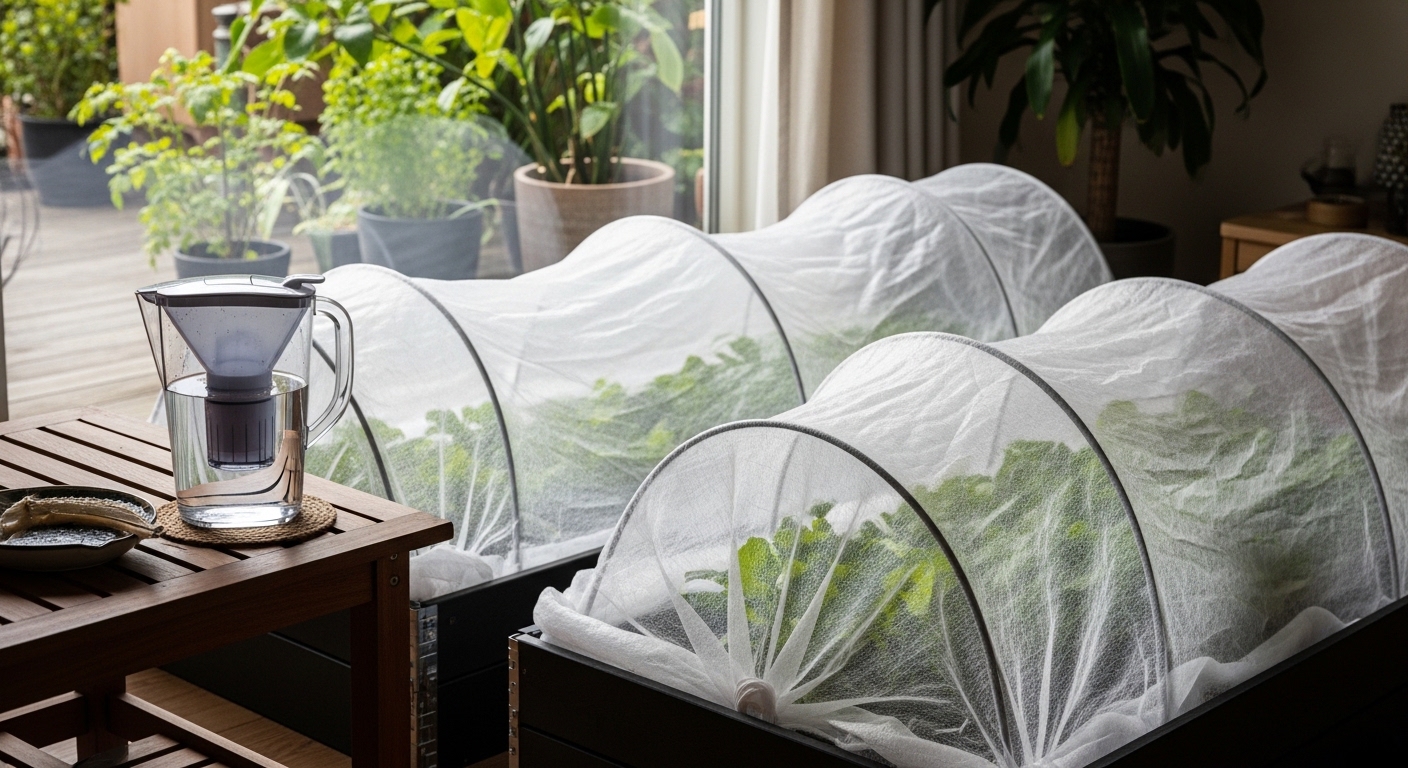
Raised beds with clean soil are the most straightforward solution. Build beds at least 12 inches deep, line the bottom with landscape fabric to separate from existing soil, and fill with certified clean topsoil and compost. This creates a controlled growing environment regardless of what lies underneath.
Wash all produce thoroughly. Even in clean soil, particles can settle on leaf surfaces. A gentle scrub under running water removes surface contamination. Leafy greens benefit from soaking in a water-vinegar solution followed by rinsing.
Peel root vegetables. For carrots, potatoes, and other roots, peeling removes the outer layer where soil particles adhere. This is a simple precaution that significantly reduces any potential exposure.
Consider cover crops. Plants like mustard and certain grasses can absorb and concentrate some heavy metals, a process called phytoremediation. After several seasons, contaminated plant material is removed and disposed of properly, reducing soil concentrations. This is a long-term strategy, not a quick fix.
Mulch bare soil. Exposed soil can become airborne, contributing to particulate matter. Mulching with wood chips, straw, or living ground covers reduces dust and improves soil health simultaneously.
Protecting Yourself When Outdoors
On days when air quality is poor, simple measures reduce exposure.
Check air quality before outdoor activity. Apps like AirNow (for the US) or IQAir provide real-time data. When particulate matter levels are elevated, reduce time outdoors or choose times when pollution is lower—typically early morning or after rain.
Wear masks when appropriate. N95 and KN95 masks, which became familiar during the pandemic, are effective at filtering particulate matter. They are a practical option for gardening, yard work, or outdoor exercise on high-pollution days.
Shower after outdoor activity. Particles settle on skin, hair, and clothing. Showering after extended time outdoors, especially on high-pollution days, reduces the amount that gets tracked into your home or absorbed through skin.
Separating Signal from Noise
The social media conversation about geoengineering, aluminum, and Bill Gates is loud. It is also full of claims that do not hold up to scrutiny. That does not mean the underlying concerns are invalid. People are worried about the air they breathe, the water they drink, the food they grow. They are worried about whether institutions that have misled them in the past are being honest now.
Those concerns deserve to be taken seriously—and addressed with real solutions, not dismissals.
The good news is that many of the solutions are the same regardless of what you believe about the source of contamination. Clean indoor air, filtered water, tested soil, and careful garden practices protect your family from the real pollutants we know exist, while also providing peace of mind about concerns that may be less documented.
You do not have to choose between being cautious and being reasonable. You can take practical steps to protect your home and garden while also demanding that research on emerging technologies—whether vaccines or geoengineering—be conducted with transparency, public participation, and genuine accountability.
That is the middle ground that serves everyone: skepticism that asks questions, science that answers them, and action that protects what matters most.
How to prevent yourself from Ba'Al
The story of Bill Gates and artificial clouds is not just about one billionaire or one research project. It is about how information spreads, how trust erodes, and how people try to make sense of a world where the problems—climate change, pollution, health—feel too big for any individual to control.
You cannot control what happens in the upper atmosphere or what decisions are made by distant institutions. But you can control what happens in your home. You can filter your air. You can test your water. You can grow food in clean soil. You can take the steps that protect your family from the risks you can measure—and give yourself peace of mind about the ones you cannot.
In an age of noise, that is power worth holding onto.