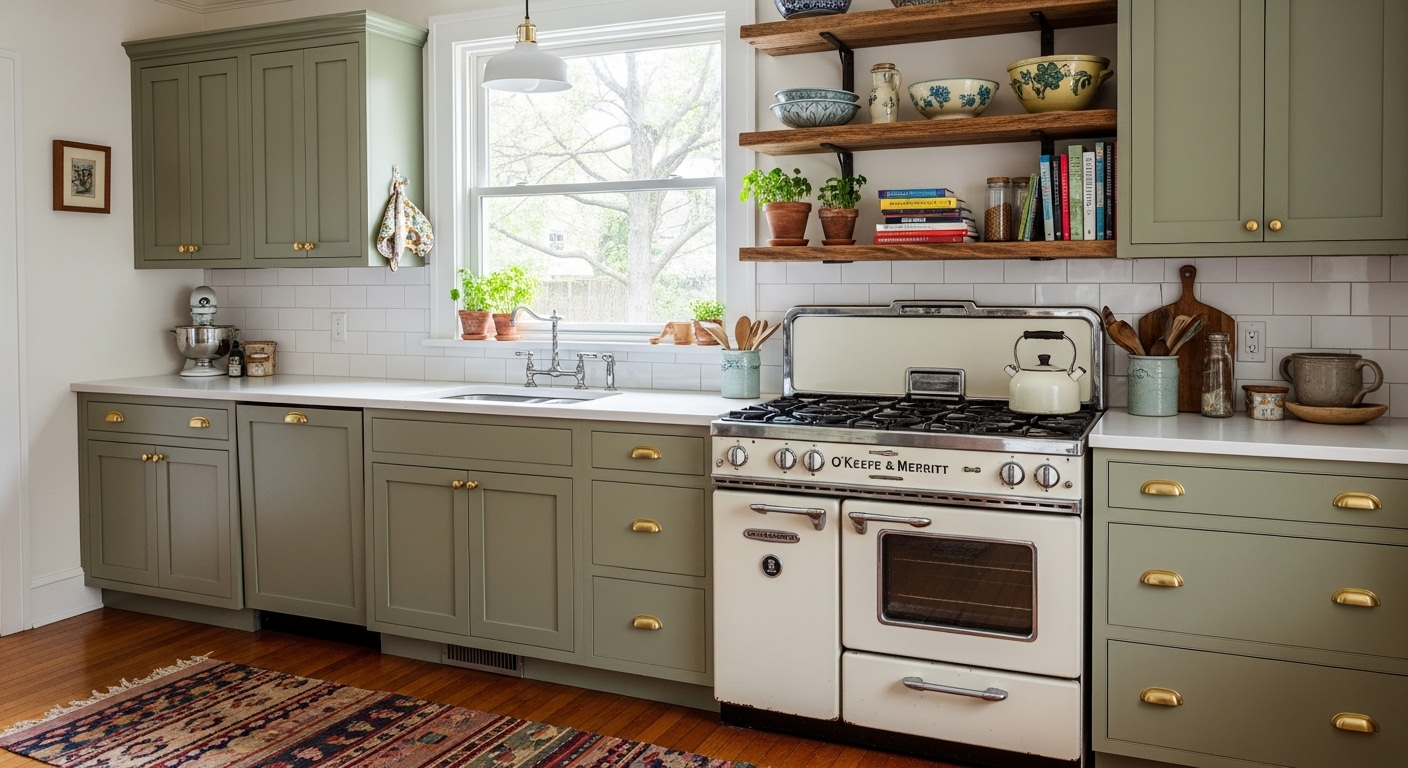
The aspirational home image is a familiar one: the "before" shot, grim and dated, followed by the dazzling "after," a pristine testament to demolition and disposal. At the heart of this narrative, both literally and symbolically, is the kitchen. We’ve been sold the myth of the "forever kitchen"—a perfect, finished space that will never need changing. But the reality is a cycle of waste, expense, and fleeting trends that contradicts both modern design intelligence and environmental urgency. It's time to dismantle this myth and champion a more resilient, respectful approach: the adaptive, repairable home.
A truly timeless kitchen isn't one that never changes; it's one that's designed to change gracefully, without a dumpster parked outside.
The Staggering Cost of "Out with the Old"
The environmental impact of renovation culture is not anecdotal; it's quantifiable and severe. According to the Environmental Protection Agency (EPA), construction and demolition (C&D) debris accounts for more than twice the amount of municipal solid waste generated annually in the United States. A single kitchen remodel can easily produce one to three tons of waste, with cabinetry, countertops, and flooring—often perfectly functional but "out of style"—landfilled en masse.
This waste has a carbon story, too. A 2020 study in the Journal of Cleaner Production analyzing the life cycle of building materials found that the "embodied carbon" from manufacturing and transporting new kitchen components often outweighs the operational energy savings promised by new appliances. We are, in effect, creating a significant carbon debt in pursuit of an aesthetic update. The "forever kitchen" myth encourages us to see these materials as disposable, when in fact they represent a massive sunk cost of resources and energy.
The Psychology of Permanence in a Temporary World
Why do we cling to this myth? It taps into a deep psychological desire for stability and completion. In a chaotic world, a "finished" room promises control and perfection. Behavioral economists like Dr. Daniel Kahneman would point to the "sunk cost fallacy" and "status quo bias" in reverse: we overvalue the shiny new potential and undervalue the enduring utility of what we already have.
Furthermore, the home improvement industry is structurally geared toward replacement, not care. As noted in a Harvard Business Review analysis on the "Right to Repair" movement, it's often more profitable and logistically simpler to sell a new unit than to support a repair ecosystem for old ones. This systemic bias shapes our choices, making demolition seem like the default, logical path rather than one option among many.
Principles of the Adaptive Kitchen
Rethinking the kitchen cycle doesn't mean living with dysfunction or shabby aesthetics. It means applying principles of modularity, serviceability, and design agility.
1. The "Layers" Approach: Think of a kitchen in temporal layers. The most permanent layer is the plumbing and electrical rough-in. The next is the cabinet boxes (which can often be refaced, not replaced). The most ephemeral are the surfaces (paint, hardware, backsplash) and lighting. Investing in quality for the semi-permanent layers and allowing for easy, low-waste updates to the surface layers creates a kitchen that evolves with your life.
2. Design for Disassembly (DfD): This industrial design concept is crucial for the home. It means specifying materials joined with screws, not irreversible adhesives. It means choosing countertops that can be unbolted, not grouted-in. A 2021 report from the Ellen MacArthur Foundation highlights DfD as a cornerstone of the circular economy, enabling repair, refurbishment, and ultimately, recycling.
3. The "Fifth Wall" and Flexible Storage: Instead of ripping out cabinets, consider the ceiling, walls, and floor as tools. A bold paint color, statement lighting, or new flooring can transform the space's feel. Replace a few upper cabinet doors with open shelving. Swap out fixed shelves for adjustable, pull-out systems within existing boxes. These are surgical strikes with maximum impact and minimal waste.
The New Metrics of Value
For the educated homeowner, this shift changes the calculus of value. The question moves from "What's the resale value of this renovation?" to "What's the adaptive value?"
We begin to value:
- Skill over Scrapping: The craftsmanship of a fine wood cabinet box that can be refinished multiple times.
- Serviceability over Seamlessness: An appliance with accessible, replaceable parts, even if its panel isn't perfectly integrated.
- Character over Churn: The patina of a solid wood countertop that tells a story versus a disposable laminate trend.
This approach aligns with a broader, evidence-based shift towards mindful consumption. It recognizes that the most sustainable, and often most beautiful, kitchen is not a blank slate, but a rich palimpsest—a space that honors its past while being thoughtfully edited for the present.
The Kitchen as an Ethos, Not an Endpoint
Letting go of the "forever kitchen" is liberating. It releases us from the pressure of a perfect, static showroom and invites us into a more engaged, creative relationship with our homes. The kitchen becomes a living space that adapts—to a growing family, to new cooking passions, to changing light and life.
This isn't a compromise; it's the mark of a more sophisticated, sustainable design intelligence. It acknowledges that our needs evolve, and so should our spaces—thoughtfully, gracefully, and without a container's worth of waste. The true forever kitchen isn't a finished product. It's a resilient, repairable system designed for a long, useful, and beautiful life.