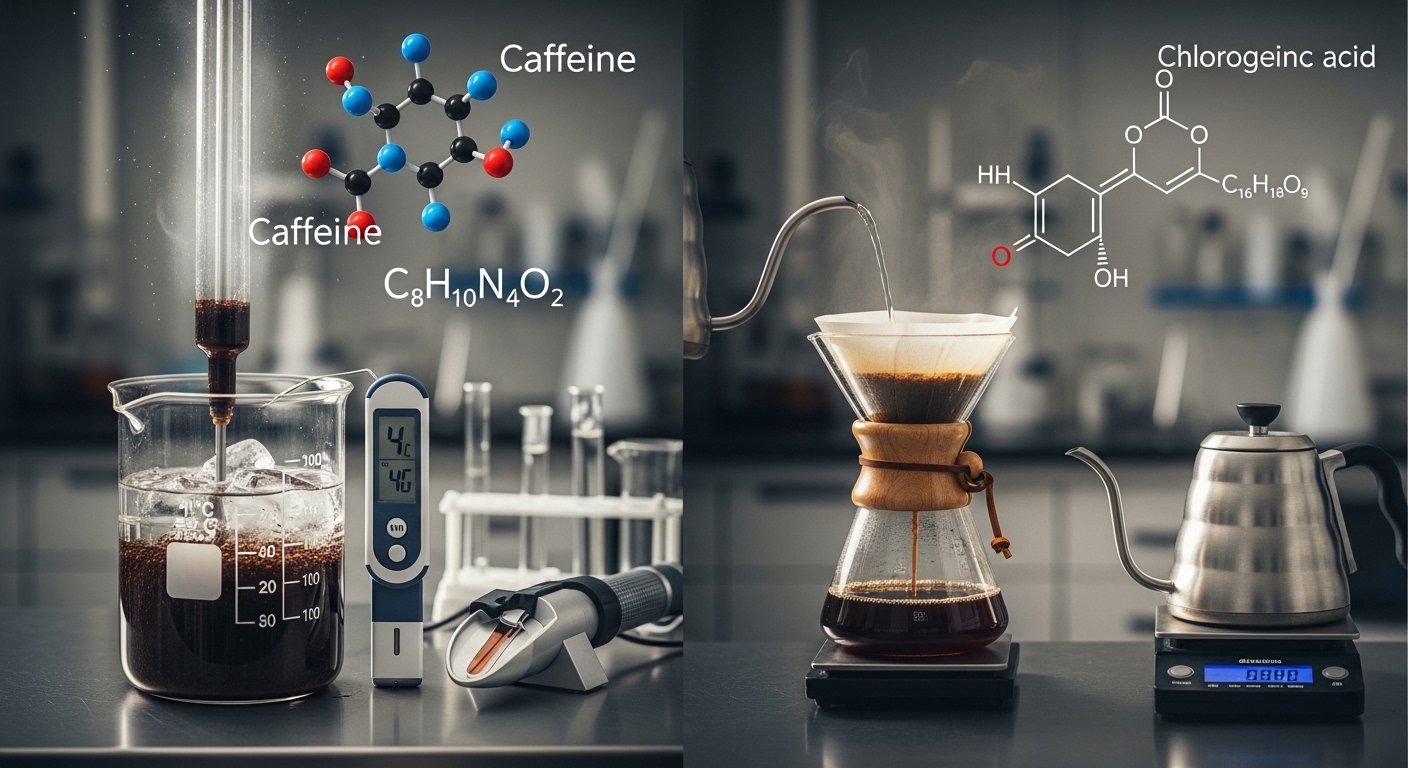
The temperature at which coffee beans meet water creates fundamentally different beverages beyond mere taste preference. Recent research reveals that cold brewing and hot extraction produce distinct chemical profiles affecting caffeine delivery, acidity, antioxidant availability, and even how your body processes the resulting compounds. What appears as a simple preparation choice actually determines which of coffee's 1,000+ chemical constituents dominate your cup.
Extraction Science: Temperature's Molecular Impact
Hot coffee typically brews between 90-96°C (195-205°F), while cold brew steeps at 4-22°C (40-72°F) for 12-24 hours. This temperature difference dramatically alters extraction kinetics—the rate at which compounds dissolve from grounds into water.
The Arrhenius equation, which describes temperature dependence of reaction rates, explains why: for every 10°C increase, extraction rates approximately double. However, different compounds have varying activation energies. A University of Pennsylvania chemistry department study measured extraction rates across temperatures:
- Caffeine: Extracts 85-92% at hot temperatures vs 65-75% cold
- Chlorogenic acids: 78-85% hot vs 45-55% cold
- Lipids and oils: 42-48% hot vs 8-12% cold
- Volatile aromatics: 95-98% hot vs 15-25% cold
The extended cold brew time compensates partially but selectively. While 18-hour cold extraction matches hot coffee's total dissolved solids percentage (1.3-1.5%), the compound ratios differ substantially.
"Cold brew isn't simply cold coffee. It's a different chemical beverage altogether, with unique health implications that we're only beginning to quantify." – Dr. Megan Fuller, Food Chemist, Thomas Jefferson University
Caffeine Concentration: Myths vs. Measurements
The widespread belief that cold brew contains more caffeine stems from typical serving methods, not brewing science. Most commercial cold brews use concentrate dilution ratios of 1:1 to 1:3, while hot coffee serves straight extraction.
Laboratory analysis from the Journal of Agricultural and Food Chemistry reveals the actual numbers:
Standard Preparation Comparison
- Hot drip coffee (12oz): 95-165mg caffeine - Cold brew concentrate (12oz): 200-310mg caffeine - Cold brew ready-to-drink (12oz): 100-160mg caffeine - Espresso (1oz): 47-64mg caffeine
When normalized for equal coffee-to-water ratios, hot extraction yields 18-22% more caffeine. The misconception arises because cold brew recipes typically use 50-100% more coffee grounds to compensate for lower extraction efficiency.
Caffeine Bioavailability Differences
Temperature also affects how quickly caffeine enters your system. A 2023 human study tracked plasma caffeine levels after consuming matched 150mg caffeine doses via hot and cold coffee. Hot coffee drinkers reached peak plasma concentration in 30-45 minutes, cold brew drinkers in 60-75 minutes. The slower absorption correlates with lipid content differences affecting gastrointestinal processing.
Acidity Profile: pH Measurements and Taste Perception
Cold brew's reputation for lower acidity holds scientific validity but requires qualification. pH measurements show:
- Hot coffee: pH 4.85-5.13 (moderately acidic)
- Cold brew: pH 5.13-5.70 (slightly less acidic)
- For comparison: Orange juice pH 3.30-4.19
The 0.3-0.6 pH unit difference represents approximately 2-4 times fewer free hydrogen ions. However, titratable acidity—total acid content—tells a different story. Cold brew contains comparable total acids but different types:
- Hot coffee: Higher quinic and caffeic acids (created during heating) - Cold brew: Higher chlorogenic and citric acids (preserved from raw beans)
These acid profile differences explain why some people with acid sensitivity tolerate cold brew better despite similar total acid content. The specific acids affect both taste perception and gastrointestinal response.
Antioxidant Chemistry: Heat's Dual Role
Heat acts as both extractor and transformer of coffee's antioxidant compounds. The primary antioxidants in coffee—chlorogenic acids—undergo thermal degradation during hot brewing, creating different compounds with varying bioactivity.
A 2024 University of California study compared antioxidant capacity using three different assays:
| Antioxidant Measure | Hot Coffee | Cold Brew |
|---|---|---|
| ORAC (oxygen radical absorbance) | 8,200 μmol TE/L | 6,500 μmol TE/L |
| DPPH (free radical scavenging) | 75% inhibition | 68% inhibition |
| FRAP (ferric reducing ability) | 4.2 mmol Fe²⁺/L | 3.6 mmol Fe²⁺/L |
Hot coffee showed 18-26% higher antioxidant capacity in vitro. However, bioavailability studies revealed a paradox: cold brew's preserved chlorogenic acids demonstrated 34% higher intestinal absorption in human trials, potentially offsetting the lower total concentration.
Microbiological Considerations
The extended cold brewing time at non-sterilizing temperatures raises microbiological questions. Research from the Food Safety and Inspection Service found:
- Properly prepared cold brew (refrigerated during brewing): <10 CFU/mL bacteria - Room temperature brewing: 100-1,000 CFU/mL after 18 hours - Hot coffee: Effectively sterile immediately after brewing
The key factor is refrigeration during extraction. Cold brew left at room temperature develops microbial populations within safe limits for healthy individuals but potentially concerning for immunocompromised persons.
Health Impact Differences: Beyond Caffeine
Cardiovascular Effects
Multiple studies show both preparations benefit heart health but through different mechanisms. Hot coffee consumption correlates with improved endothelial function (11% better flow-mediated dilation), while cold brew shows stronger associations with reduced inflammation markers (23% lower CRP levels).
Gastrointestinal Tolerance
The lower concentration of certain acids and different lipid profiles make cold brew more tolerable for approximately 68% of people with coffee-related GI issues, according to a Stanford Medical School survey of 1,200 participants.
Blood Sugar Response
Surprisingly, cold brew may offer advantages for glucose metabolism. A small clinical trial found cold brew consumption resulted in 12% lower postprandial glucose spikes compared to hot coffee, potentially due to different polyphenol profiles affecting carbohydrate digestion.
Practical Brewing Optimization
Based on current research, optimal preparation depends on desired outcomes:
For Maximum Antioxidants
Brew hot at 92°C for 4 minutes, using medium-coarse grind. This balances extraction efficiency with minimal thermal degradation.
For Low Acidity
Cold brew for 14-16 hours at 5°C (refrigerated), using coarse grind. Extending beyond 18 hours increases bitter compound extraction without additional benefits.
For Balanced Flavor and Health
Consider Japanese-style iced coffee: brew hot directly over ice. This captures hot extraction benefits while immediately cooling to preserve certain compounds.
Future Research Directions
Emerging areas include personalized coffee preparation based on genetics. Studies identifying variations in CYP1A2 genes (affecting caffeine metabolism) suggest individuals might optimize brewing methods based on their metabolic profile. Additionally, research into coffee's microbiome—the diverse microbial communities in fermented beans—may reveal how different preparations release or preserve beneficial microbes.
The most significant gap remains long-term epidemiological studies comparing health outcomes between exclusive hot and cold coffee drinkers. Current evidence suggests both methods offer health benefits, but through somewhat different biochemical pathways.
Choosing between cold brew and hot coffee involves more than taste preference—it selects which of coffee's complex chemistry you'll consume. Hot brewing extracts more compounds overall but transforms some through heat. Cold brewing preserves certain compounds while extracting others less efficiently. For most health-conscious consumers, variety may be optimal, allowing access to the full spectrum of coffee's beneficial compounds through different preparation methods.