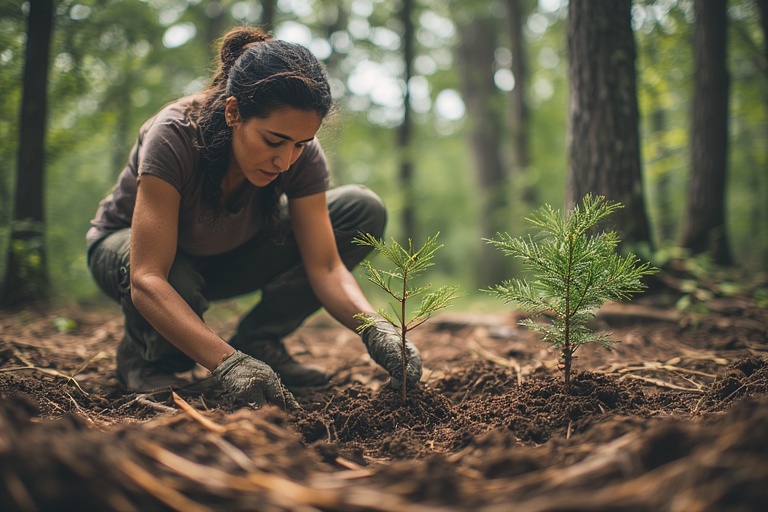
Welcome to the front lines of climate-forward forestry, where scientists are no longer trying to restore forests to their historical ranges but are actively preparing them for a climate future we can barely imagine. These researchers have become time travelers, planting the forests of 2070 today.
The Silent Migration: When Trees Can't Walk
As temperatures rise, trees face a brutal reality: their suitable climate zones are shifting northward up to 4 miles per year, while forests themselves can only migrate naturally at about 1 mile per year. This creates what scientists call "climate debt" - a growing gap between where trees are and where they need to be.
"The rules our forests lived by for millennia no longer apply," explains Dr. Torres, lead researcher at the Climate Forestry Initiative. "We're seeing mature trees stressed to the point of collapse because the climate they're rooted in has fundamentally changed beneath them."
The Toolkit for Future Forests
Forestry scientists are employing several radical strategies to build climate resilience:
1. Assisted Migration: Giving Trees a Lift North
The most controversial approach involves deliberately moving tree species north of their historical ranges. There are three levels of this intervention:
- Assisted Population Migration: Moving seeds from warmer southern parts of a species' range to northern areas
- Assisted Range Expansion: Planting species just beyond their current northern boundaries
- Assisted Species Migration: Introducing completely new species that have never grown in the region
2. The "Super Tree" Search
Researchers are scouring hotter, drier regions for what they call "super trees" - individual specimens that show remarkable resilience to climate stress. By propagating these climate-adapted genetics, they're essentially speed-running evolution.
3. Diversity as Defense
Gone are the days of monoculture plantations. The new philosophy embraces "portfolio theory" forestry - planting diverse mixes of species to ensure that if some fail to climate shocks, others will thrive.
Case Study: Minnesota's Great Climate Forest Experiment
In the Chippewa National Forest, researchers have established one of North America's most ambitious climate adaptation projects. They're testing 48 different tree species from across the continent, monitoring which might survive Minnesota's future climate.
"We're essentially running multiple climate scenarios simultaneously," says forest ecologist Mark Johnson. "Some plantings will fail, and that's valuable data. The winners will become the foundation for Minnesota's forests in 2100."
Early results show surprising success stories:
- Ponderosa Pine from Colorado thriving in what used to be maple territory
- Shortleaf Pine from Arkansas showing remarkable drought tolerance
- Northern Red Oak struggling while Southern species adapt better
The Ethical Dilemma: Playing God with Ecosystems
Not everyone supports this hands-on approach. The debate within forestry circles is fierce:
The Interventionists Argue:
"We've already altered the climate so dramatically that doing nothing is the riskiest choice," says Dr. Torres. "We're not introducing alien species - we're helping native ecosystems adapt to human-caused changes."
The Traditionalists Counter:
"Forests have survived climate changes before," responds Dr. James Chen of the Wilderness Society. "When we start moving species around, we risk creating ecological Frankenstein's monsters that could disrupt entire ecosystems."
What's at Stake: More Than Trees
The future of our forests isn't just about scenery - it's about survival. Forests provide:
- Carbon Storage: Mature forests are critical carbon sinks
- Water Regulation: They filter and regulate water supplies for millions
- Biodiversity: Host to countless species of plants and animals
- Economic Stability: Supporting timber, tourism, and recreation industries
The Human Element: Foresters as Future-Builders
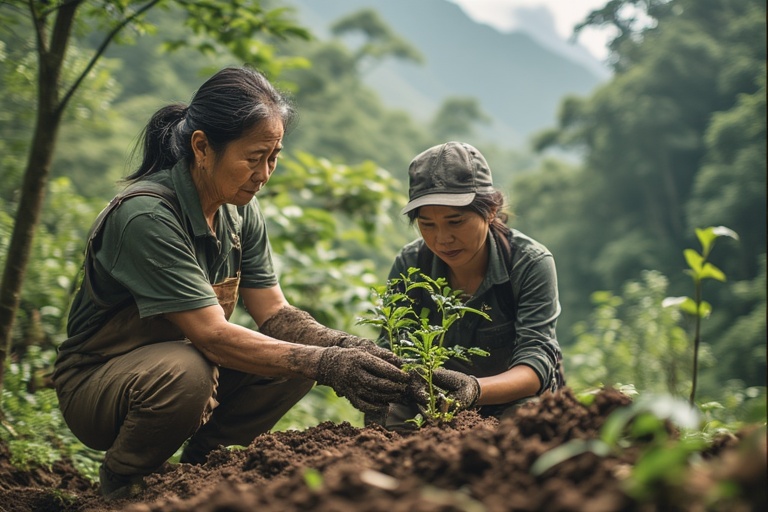
For the scientists on the ground, this work is deeply personal. "I used to think in terms of centuries," reflects veteran forester Maria Chen. "Now I'm planning for climate scenarios that my grandchildren will experience. Every seedling we plant is an act of hope - and responsibility."
A Glimpse of Tomorrow's Forests
The forests of 2070 will look different. In the Pacific Northwest, we might see California redwoods growing in British Columbia. New England's famous sugar maples could be replaced by oak and hickory from further south. The iconic boreal forest may shift hundreds of miles north.
What's emerging is a new conservation philosophy: rather than trying to preserve nature in a static state, we must learn to manage change proactively. As Dr. Torres watches her young Longleaf Pines sway in the Minnesota breeze, she sees not just trees, but sentinels of a new relationship with nature.
"We're not just planting for today's climate," she says, brushing soil from her hands. "We're planting for a world we can't yet see, but that these trees will call home."