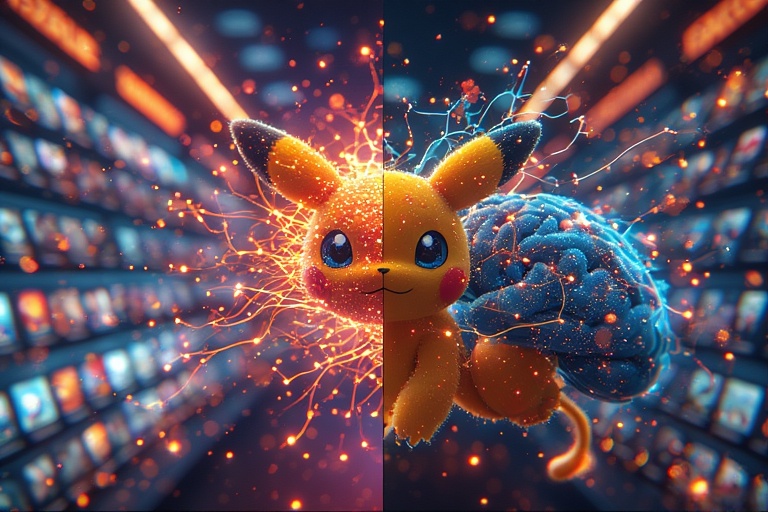
There's a particular kind of magic that happens when Steam's seasonal sales arrive. Your wishlist suddenly glows with tempting discounts, your friends start sharing their hauls, and that game you've been eyeing for months finally hits that sweet price point. It feels like a celebration, a holiday for gamers. But what if this entire experience was less like a spontaneous party and more like a brilliantly orchestrated symphony? What if every colorful banner, every countdown timer, and every discount percentage was carefully designed using principles that tap directly into human psychology?
The truth is, your behavior during these sales is being gently guided by forces you might not even notice. Steam's storefront during major sales events represents one of the most sophisticated applications of behavioral science in the digital world today. It's not about tricking you—it's about understanding you. Understanding what makes you click, what makes you hesitate, and ultimately, what makes that "Purchase" button feel so satisfying to press.
"The difference between a want and a need disappears when the clock is ticking. Steam sales master this temporal alchemy."
Think of it this way: game developers and storefront designers are like chefs in a kitchen. They have various ingredients—pricing, presentation, timing, social proof—and they mix them in specific ways to create dishes that are simply irresistible. They're not forcing you to eat; they're making the food smell so good you can't help but be drawn to the kitchen. Let's pull back the curtain on this kitchen and see what's really cooking.
The Countdown Conundrum: Why Time Pressure Changes Everything
That flashing timer counting down the final hours of a deal isn't just for show. It triggers what psychologists call "loss aversion"—the powerful human tendency to prefer avoiding losses over acquiring equivalent gains. The pain of missing out on a good deal feels much more intense than the pleasure of saving the money. This isn't a flaw in human reasoning; it's a fundamental part of how we're wired, a survival mechanism that served our ancestors well when missing a food source could mean starvation.
In many ways, Steam's time-limited deals function like carefully controlled experiments in behavioral economics. Researchers have long known that placing artificial scarcity on items makes them more desirable. When you see "Offer ends in 2 hours!" your brain shifts gears from deliberate, analytical thinking to faster, more instinctual processing. You're no longer asking "Do I need this game?" but "Can I afford to lose this opportunity?" The time pressure creates a mild state of excitement that can override our usual purchasing caution.
This principle has fascinating parallels in nature. Consider how animals behave when a rare food source becomes available for a limited time. They'll often eat beyond their immediate needs, driven by an instinct to store resources against future scarcity. Our Steam libraries, filled with unplayed games bought on sale, might be the digital equivalent of this—a modern hoarding instinct triggered by digital scarcity.
The Wishlist Whisperer: How Your Own List Sells to You
Your Steam wishlist is more than just a convenient place to remember games you're interested in. It's a powerful psychological contract you've made with yourself. Every time you add a game to your wishlist, you're making a small commitment. You're essentially saying, "This is something I want enough to track." When that game finally goes on sale, Steam isn't just notifying you about a price drop—it's reminding you of a promise you made to yourself.
This triggers the psychological principle of "consistency bias." Humans have a deep desire to appear consistent in their beliefs and behaviors. When we've publicly stated we want something (and adding to a wishlist, even privately, feels like a statement), we feel internal pressure to follow through when the opportunity arises. The sale notification becomes the perfect excuse to act consistently with your previously stated intention.
The brilliance of the wishlist system is that it makes the sale feel personal. It's not a random discount for everyone; it's a special alert just for you, about something you specifically said you wanted. This transforms the shopping experience from browsing a crowded digital store to receiving curated, personalized opportunities. It's the difference between a megaphone announcement and a friend tapping you on the shoulder to say, "Hey, remember that thing you wanted? It's available now."
| Sale Element | Psychological Principle | How It Feels to You |
|---|---|---|
| Limited-Time Countdown | Scarcity & Loss Aversion | "I might miss out if I don't act now!" |
| Wishlist Notifications | Consistency & Commitment | "This is exactly what I wanted!" |
| Discount Percentages | Anchoring & Perceived Value | "I'm getting such a great deal!" |
| User Reviews & Tags | Social Proof | "Other people like me enjoy this!" |
The Discount Dance: Why 75% Off Feels Like Victory
There's something uniquely satisfying about seeing a steep discount percentage. That "75% off" badge doesn't just tell you the price is low; it makes you feel smart for waiting. This leverages "anchoring," a cognitive bias where we rely too heavily on the first piece of information we see (the initial price) when making decisions. The original price becomes the anchor, and any discount from that number feels like gained value.
But there's another layer at work here—the psychology of achievement. Video games are built around reward systems: completing quests, earning achievements, leveling up. Steam sales cleverly gamify the shopping experience itself. Finding a great deal, especially on a game that's rarely discounted, triggers a similar sense of accomplishment. You've "won" the waiting game. The purchase becomes more than just acquiring a game; it's the successful conclusion of a mini-game of patience and strategy.
This experience shares interesting similarities with how our brains respond to successful hunting or foraging in ancestral environments. The thrill of the hunt isn't just about obtaining resources—it's about the satisfaction of using skill and timing to succeed. When you snag that perfect deal after waiting patiently, you're tapping into that ancient reward circuitry. The game you buy becomes your trophy, proof of your savvy shopping skills.
Building Better Buying Habits: Becoming a Conscious Gamer
Understanding these psychological principles isn't about making you avoid Steam sales altogether. They're often genuinely great opportunities to expand your gaming library at affordable prices. The goal is to shift from reactive buying to conscious collecting. When you recognize the design behind the experience, you can engage with it on your own terms.
Start by asking different questions when you see a tempting deal. Instead of "Is this a good discount?" try "When will I actually play this?" Consider creating a personal rule, like the "24-hour rule"—waiting a day before purchasing any deal to see if the urge persists beyond the initial excitement. Curate your wishlist mindfully, treating it as a "to-play" list rather than a "might-be-nice" list.
The most empowering realization is that you're in control of your gaming experience. The sale is an invitation, not a command. The colorful banners and countdown timers are part of the theater of shopping, designed to make the experience more exciting and engaging. When you understand the science behind the show, you can appreciate the craftsmanship while still making choices that align with your actual gaming interests and budget.
Next time you find yourself browsing a Steam sale, take a moment to appreciate the intricate dance between design and desire. Notice the elements at play—the urgency, the personalization, the social signals. Then make your move not as a target of marketing, but as an informed participant in a fascinating psychological playground. Your wallet—and your backlog of unplayed games—will thank you for this new level of awareness.
The real victory isn't in the games you buy, but in understanding the game you're playing.