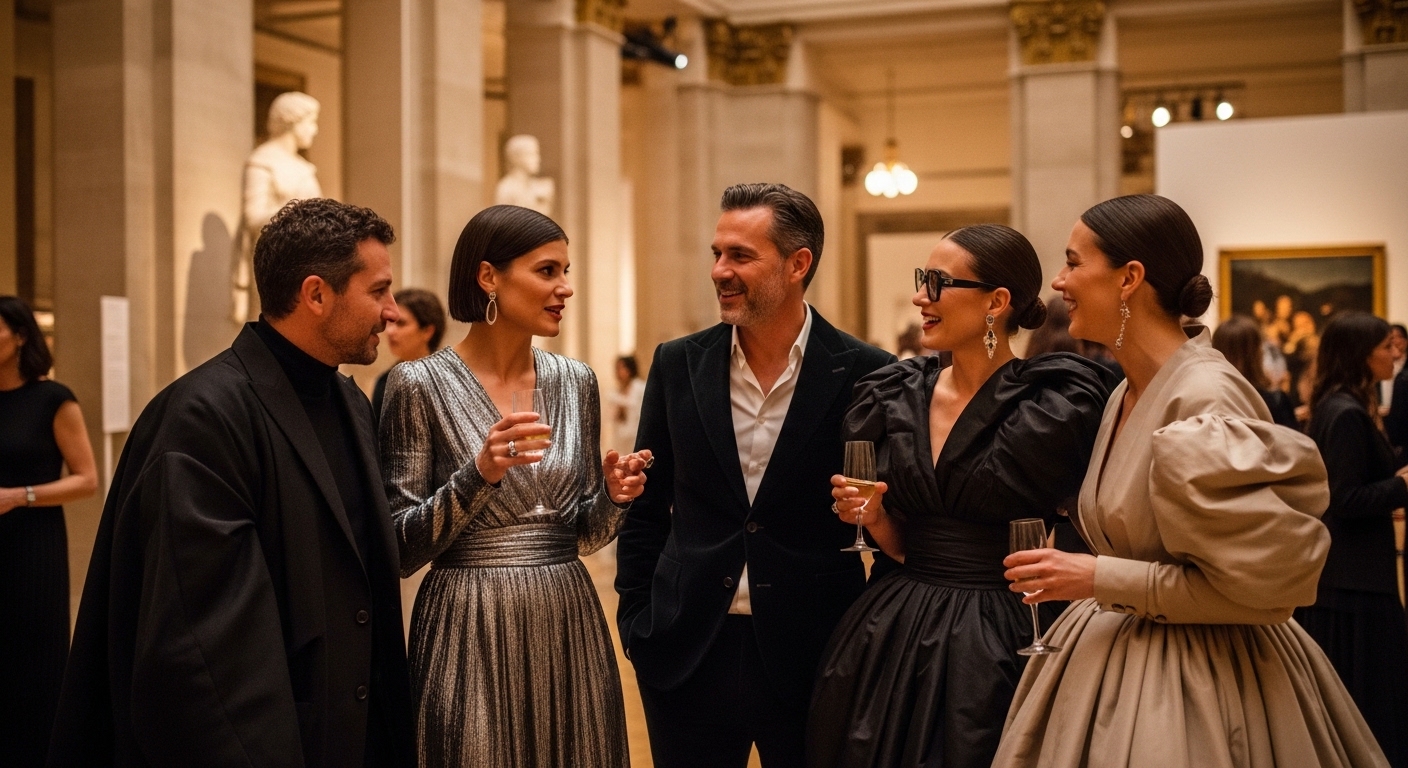
The VIP opening of "The Antwerp Six" exhibition at Antwerp's MoMu museum felt less like a formal fashion event and more like a family reunion. On Friday night, the city's fashion elite gathered to celebrate the designers who put Belgian fashion on the global map four decades ago, with hugs, memories, and emotional tributes flowing freely through the museum's galleries.
Dries Van Noten embraced Walter Van Beirendonck. Raf Simons hugged his friend Pieter Mulier. Ann Demeulemeester led a small group through the exhibition, pointing out personal artifacts from her early career. The scene captured the enduring bonds among a group of designers who emerged from the Royal Academy of Fine Arts in the 1980s and collectively changed fashion's geography.
"They reshaped neighborhoods. They put our Academy on the global map. They made Antwerp a reference point in fashion. We owe them all of that." — Els van Doesburg, Mayor of Antwerp
The Exhibition and Its Honored Designers
The exhibition, which opened to the public Saturday, honors the six designers who graduated from Antwerp's Royal Academy of Fine Arts between 1980 and 1981 and became known collectively as the Antwerp Six: Dries Van Noten, Walter Van Beirendonck, Ann Demeulemeester, Dirk Van Saene, Marina Yee, and Dirk Bikkembergs. Their emergence in the mid-1980s challenged the dominance of Paris, Milan, and London, establishing Antwerp as a legitimate fashion capital.
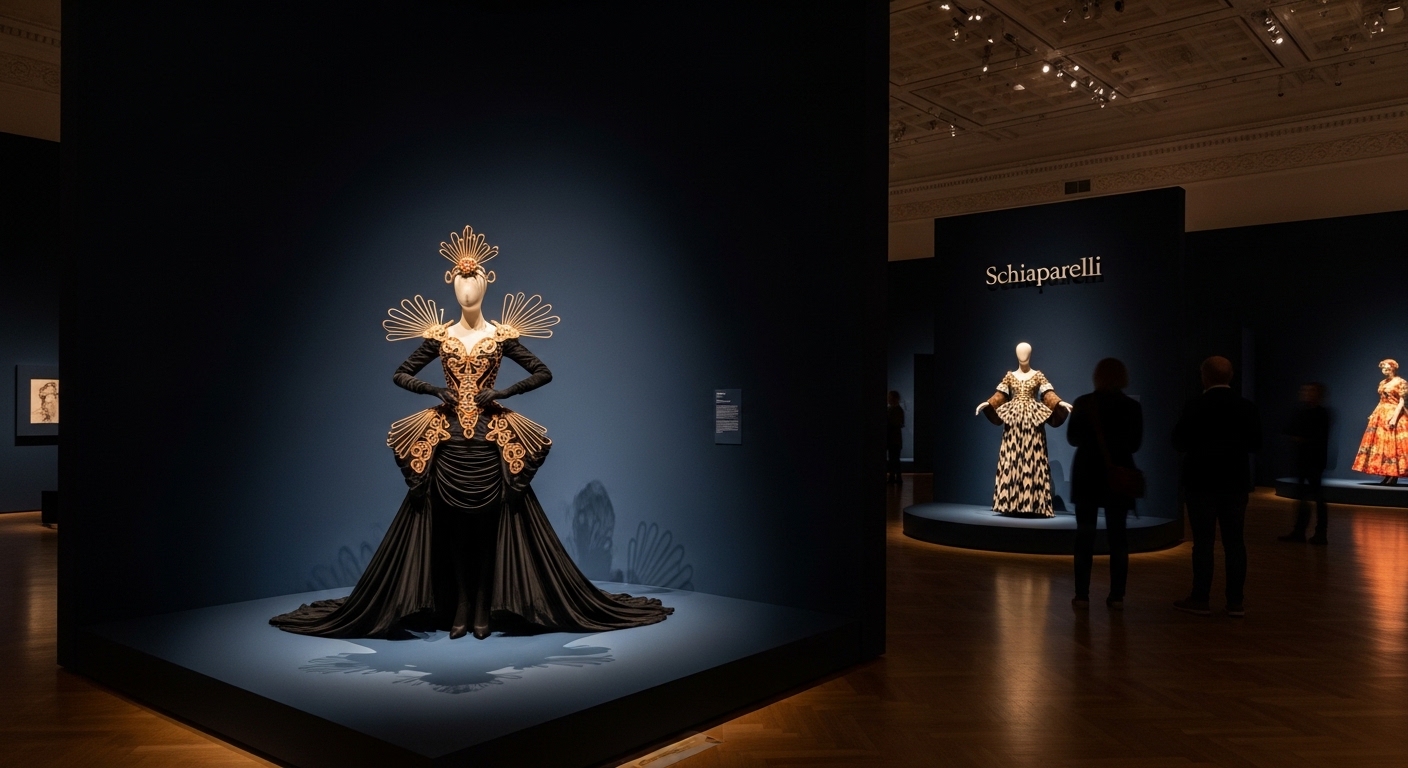
The multi-media display at MoMu features garments, archival materials, video footage, and personal artifacts from the designers' early careers. Among the attendees marveling at the exhibition were milliner Stephen Jones, fashion critic Suzy Menkes, stylist Olivier Rizzo, fashion educator Linda Loppa, and production guru Etienne Russo—all figures who witnessed and supported the Antwerp Six's rise.
Four of the surviving members attended the opening (Bikkembergs was absent, and Yee passed away last year). After the museum ceremony, they gathered for a casual dinner at the Botanic Sanctuary Antwerp, held in a 17th-century chapel—an appropriately historic setting for a reunion celebrating four decades of fashion history.
Personal Moments and Memories
The evening was filled with intimate moments that revealed the deep personal connections among the designers. Ann Demeulemeester was spotted pointing to her "Golden Spindle" award—a diminutive fashion prize she received in 1982, shortly after graduating. She showed the award to Stefano Gallici, the current creative director of her namesake house, connecting the brand's past with its present leadership.
Raf Simons, who has long cited the Antwerp Six as influences, was present to pay his respects. Pieter Mulier, who had just completed his final day at Alaïa before starting at Versace on July 1, attended and shared personal memories of his own fashion journey. Mulier noted that Bikkembergs was his go-to brand as a young fashion enthusiast, particularly the pants and ankle boots with laces passing through the heel. "I used to wear that one. I had it in four colors," he said, as a photo of the boot flashed on a monitor in the exhibition.
Mulier also marveled at video clips showing a student-aged Van Noten, who in those days resembled "Together Forever" singer Rick Astley—a reminder that before they were fashion icons, they were simply young designers finding their way.
Stephen Jones and His 28-Year-Old Jacket
British milliner Stephen Jones, a longtime friend and collaborator of many Antwerp designers, was easy to spot at the opening in his traffic-cone-orange vinyl jacket by Walter Van Beirendonck. Jones revealed he had owned the jacket for 28 years, though he noted with amusement that he had forgotten how stiff the sleeves can become in winter. He was grateful for the crowded, warm venues that made wearing it comfortable.
Jones's presence underscored the international reach of the Antwerp Six's influence. The designers' work has long been embraced by creative figures across fashion, music, and art, with their distinctive aesthetic resonating far beyond Belgium's borders.
Van Noten's Next Chapter
Van Noten, who officially retired from his namesake label in 2024 but remains active in cultural projects, was soon headed to Venice to mount his debut exhibition at his new cultural foundation at the Palazzo Pisani Moretta. The exhibition will feature fashions by Christian Lacroix, Comme des Garçons, and emerging Palestinian designer Ayham Hassan—demonstrating Van Noten's continued commitment to fashion curation and supporting new talent even after stepping away from seasonal collections.
The Venice foundation represents a new phase for the designer, who has used his retirement to focus on projects that celebrate fashion history and emerging voices. His presence at the Antwerp Six opening, celebrating his own cohort's legacy while looking toward new curatorial work, captured the evening's dual focus on honoring the past and shaping fashion's future.
The Mayor's Tribute
Antwerp mayor Els van Doesburg, wearing a sleeveless black pantsuit and sequin top by Christian Wijnants—whose boutique is located near the museum—spoke at the official opening ceremony about her emotional connection to her clothes and paid tribute to the Six for catapulting the port city into "a stronghold of visionary fashion and creativity."
Her remarks reflected how deeply the Antwerp Six transformed not just fashion but the city itself. Before their emergence, Antwerp was known primarily as a commercial port. The designers' success attracted attention to the city's fashion academy, created a local industry of boutiques and ateliers, and made Antwerp a destination for fashion lovers worldwide. As Van Doesburg noted, they "reshaped neighborhoods" and "made Antwerp a reference point in fashion."
The Legacy of the Antwerp Six
The Antwerp Six's story began in the early 1980s, when a group of graduates from the Royal Academy of Fine Arts decided to take their work to London. With limited budgets but outsized ambition, they loaded their collections into a van and drove to British trade shows, where their unconventional designs caught the attention of international buyers and press.
Their aesthetic was radical for its time: deconstructed silhouettes, unexpected fabric combinations, a rejection of the glamour and excess that dominated 1980s fashion. They brought a conceptual, artistic approach to clothing that anticipated the deconstruction movements of the 1990s and influenced generations of designers to come.
While the six designers eventually pursued individual paths—Van Noten built a global luxury brand, Demeulemeester developed a devoted following for her poetic aesthetic, Bikkembergs became known for sportswear, Van Beirendonck continued to push boundaries with avant-garde collections—their collective impact on fashion's geography endures. The Royal Academy remains one of the world's most respected fashion schools, and Antwerp continues to produce innovative designers who carry forward the legacy of the Six.
What the Exhibition Offers Visitors
"The Antwerp Six" exhibition at MoMu offers visitors a rare opportunity to see the designers' early work alongside archival materials that document their emergence. The multi-media display includes garments, sketches, photographs, and video footage that trace the group's journey from students to international fashion figures.
For fashion enthusiasts, the exhibition provides context for understanding how a small group of Belgian designers challenged the established fashion system and created space for alternative voices. For younger designers and students, it offers inspiration and evidence that geographic location does not determine creative potential—talent and vision can emerge from anywhere.
The exhibition runs at MoMu Antwerp through a date to be determined. With the fashion world's attention focused on the city, the opening weekend drew visitors from across Europe and beyond, all eager to celebrate the designers who, 40 years ago, proved that fashion could be both intellectually rigorous and commercially successful—and that Antwerp deserved a place on the fashion map.