
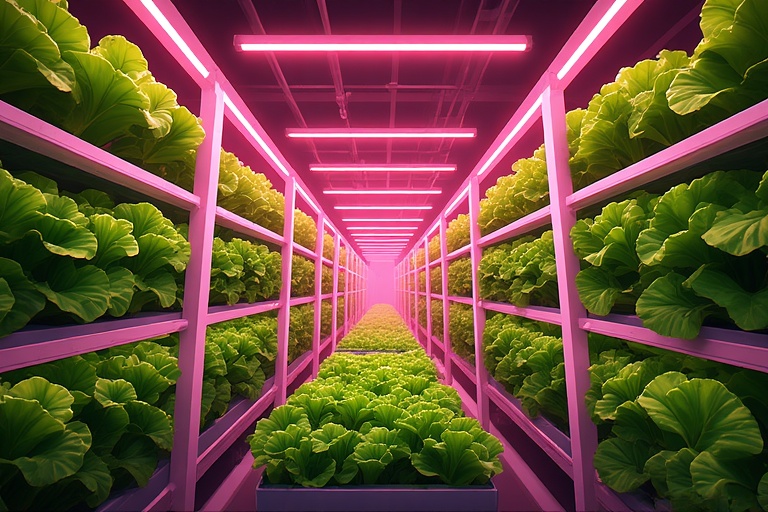
The scent is not of damp earth, but of filtered, recirculated water. The light doesn't arc across the sky; it emanates from endless rows of pink-hued LEDs. This isn't Iowa; it’s a disused warehouse in Newark, a repurposed shipping container in Berlin, or the core of a new skyscraper in Singapore. Welcome to the frontier of "extreme vertical farming," where the ambition is no longer to supplement the food supply, but to fundamentally rewrite the geography of agriculture. After a decade of hype, pilot projects, and high-profile bankruptcies, the industry is entering a more mature, yet even more audacious, phase. The question moving from Silicon Valley boardrooms to the portfolios of sovereign wealth funds is stark: Is this technologically dazzling vision finally on the cusp of commercial sustainability, or is it a capital-intensive solution in search of a scalable problem?
De-Influencing Trend: Marketing in an
From Niche Greens to Calorie Ambition
The first wave of vertical farming focused on the low-hanging fruit—literally. High-value, fast-growing leafy greens and herbs with short supply chains into urban restaurants became the proof of concept. Companies like New York’s Bowery Farming and New Jersey’s AeroFarms mastered the art of growing flawless basil and arugula with 95% less water. But the business model faced a ceiling. "You can only sell so much $5 clamshell of microgreens," notes an agritech venture capitalist who requested anonymity. "The real transformation begins when you move from garnishes to staples." That shift is now underway. Companies are now targeting strawberries, blueberries, tomatoes, and even staple crops like wheat and potatoes. In Japan, Spread Co.’s massive automated facility produces 30,000 heads of lettuce daily, showcasing the potential for automation to curb the industry’s labor costs. The pivot is strategic: capturing a larger share of the consumer grocery basket and moving from a luxury item to a household staple.
"The industry's adolescence was defined by proving we could grow food without sun or soil. Its adulthood will be defined by proving we can do it at a price that competes with, and ultimately withstands, climate-volatile field agriculture," says Dr. Anika Collins, a food systems economist at the Copenhagen Institute for Sustainability.
The Stacked Calculus: Deconstructing the Business Model
The viability of a vertical farm hinges on a fragile equilibrium between immense operational costs and premium revenue streams. The energy consumption for LEDs and climate control remains the single largest expense, often constituting 30-40% of operational overhead. This makes the farms acutely sensitive to electricity price spikes, as seen in Europe following recent geopolitical tensions. Consequently, the leading players are not just farmers; they are energy arbitrage experts. They are increasingly colocating with renewable energy sources, leveraging waste heat from data centers, or designing systems that use 40% less energy than those from five years ago.
The revenue side is evolving beyond direct B2C sales. The most promising models are integrating into the food supply chain as strategic partners:
- B2B Contract Growing: Supplying consistent, pesticide-free produce directly to supermarket chains (like Kroger or Tesco) or restaurant groups, guaranteeing year-round supply and reducing their import dependency.
- Pharmaceutical & Nutraceutical Partnerships: Using controlled environments to grow plants with optimized levels of specific bioactive compounds for supplement companies.
- Urban Real Estate Symbiosis: In cities like Singapore and Seoul, vertical farms are being designed into new mixed-use developments, reducing transport costs to zero and offering "hyper-local" food as a branded amenity for residents.
Geopolitics in the Grow Room
The drive for vertical farming is no longer purely an economic or environmental argument; it is becoming a geopolitical one. Nations with limited arable land or concerns over food sovereignty are investing heavily. Singapore, which imports over 90% of its food, aims to produce 30% of its nutritional needs locally by 2030, with vertical farming as a centerpiece. The Gulf states, particularly Saudi Arabia and the UAE, view the technology as critical to their long-term food security strategies, pouring state investment into desert-based research facilities. In regions prone to droughts or floods, vertical farming offers a buffer against climate-induced disruptions to traditional supply chains. This state-level backing provides a crucial cushion of patient capital that pure venture-backed startups lack, allowing for longer R&D horizons.
The Roadblocks to Scale: More Than Just Technology
For all its promise, the path to profitability is strewn with challenges. The capital expenditure (CAPEX) for a large-scale facility can run into the tens of millions, creating a high barrier to entry and immense pressure on return on invested capital (ROIC). Consumer acceptance is another hurdle; the "naturalness" of food grown without sun remains a marketing challenge in some demographics. Perhaps the most significant strategic risk is over-engineering. The quest for full automation and data optimization can lead to fantastically complex systems that are difficult to maintain and replicate. The winners may be those who master "appropriate tech"—solutions that are sophisticated enough to be efficient, but simple enough to be robust and scalable across global markets.
The Future Harvest: Strategic Takeaways for Business Leaders
The extreme vertical farming movement is more than an agritech niche; it’s a case study in industrial disruption. For investors, it signals a move from speculative venture bets towards infrastructure-level investments with sovereign backing. For retail and food service executives, it represents a future procurement lever for price-stable, sustainable, and traceable produce. For urban planners, it’s a new component of resilient city infrastructure.
The next five years will see a great consolidation. The companies that survive will be those that have moved beyond the science experiment phase to master the unglamorous fundamentals of unit economics, energy procurement, and supply chain logistics. They will have diversified their crop portfolios and revenue streams. They will have formed symbiotic partnerships that go beyond offtake agreements to shared risk and innovation. The harvest from the concrete jungle may not feed the world tomorrow, but it is planting the seeds for a more resilient, decentralized, and technologically empowered food system—one LED-lit rack at a time.
Discussion