Walk into any store and you will see jeans priced from $20 to over $300. The difference seems obvious—expensive jeans must be better, right? But after testing multiple pairs across price points, analyzing fabric composition, construction methods, and real-world wear patterns, the answer gets interesting. Sometimes you genuinely get what you pay for. Other times, you are paying for a label.
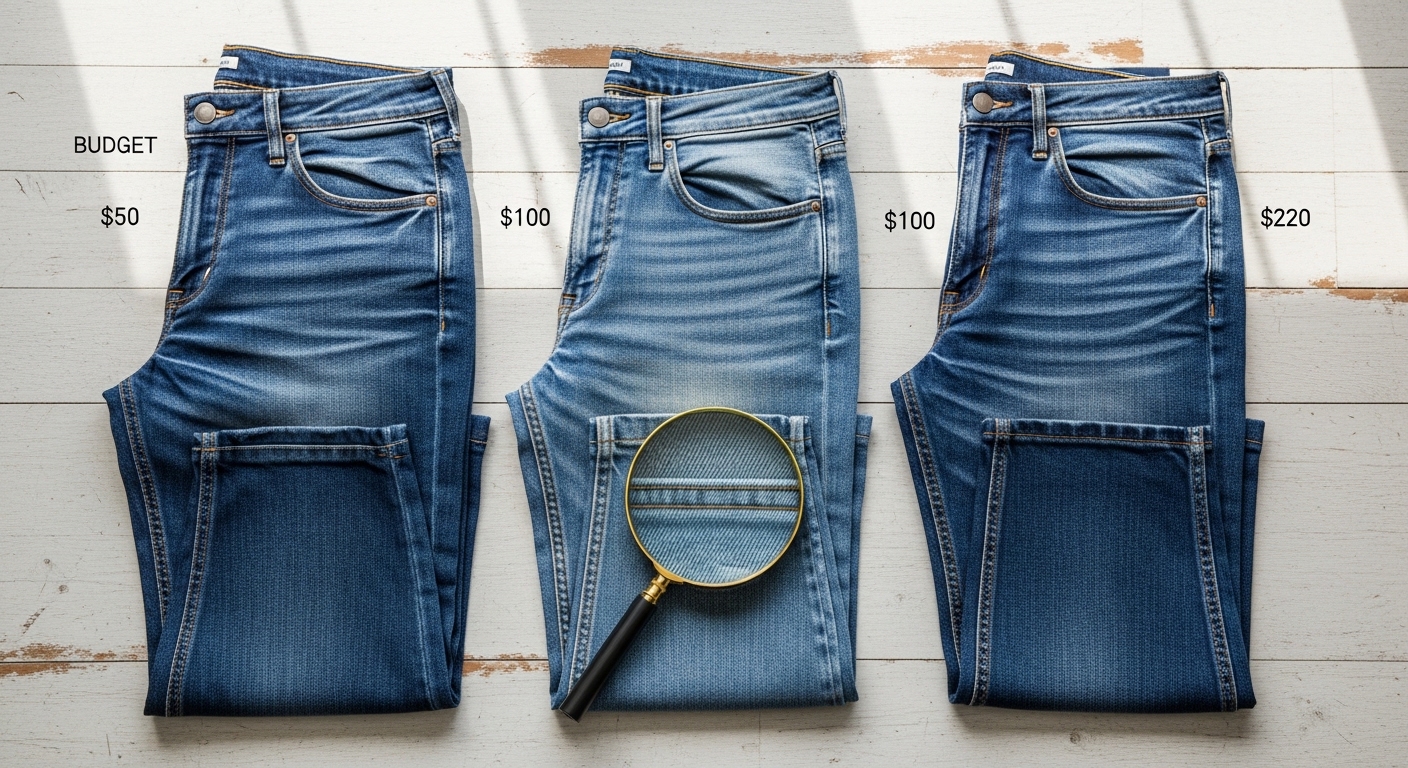
We tested jeans at three price tiers—budget ($40-60), mid-range ($90-110), and premium ($180-220)—looking at fabric weight, stitching quality, hardware durability, color retention after washing, and real comfort over extended wear. Here is what we found.
Fabric Composition: The Cotton Story
The most immediate difference between budget and premium jeans is what they are actually made of. A textile science analysis of multiple brands revealed consistent patterns [citation:1].
Budget jeans typically contain 70-80% cotton mixed with significant polyester—sometimes 20-25%—plus 1-3% elastane for stretch. This blend reduces cost because polyester is cheaper than cotton, but it also affects breathability and how the fabric ages [citation:4].
Mid-range jeans jump to 85-95% cotton with minimal polyester and similar stretch content. The difference in feel is noticeable immediately—the fabric feels denser and more substantial [citation:1].
Premium jeans often hit 93-98% cotton with specialized elastic fibers like elastomultiester rather than standard spandex. This matters because elastomultiester improves shape retention and durability while maintaining softness [citation:1].
One tester measured fabric thickness with a digital caliper. Budget denim measured approximately 0.6 mm thick. Premium denim from the same test reached 0.8 mm. That 33% difference translates directly to durability and feel [citation:1].
Stitching and Construction: Where Corners Get Cut
Flip your jeans inside out. This single action reveals more about quality than any price tag. Budget jeans often show messy, uneven stitching along waistbands and inseams. Raw fabric edges remain exposed rather than being finished properly. Rivets are thin, few in number, and sometimes purely decorative [citation:1].
Premium jeans tell a different story inside out. Stitching runs straight and even. Raw edges tuck neatly into seams. Pockets secure with double chain stitch for reinforcement. Rivets are larger, thicker, and actually functional—they strengthen stress points rather than just looking pretty [citation:1].
The difference extends to stitch density—how many stitches per inch. Higher-end construction uses more stitches per inch, creating stronger seams that resist unraveling. This is invisible when you buy the jeans but becomes obvious after six months of wear [citation:4].
Pocket construction also separates tiers. Budget jeans often use thin pocket fabric that tears or develops holes within months. Premium brands use thicker pocket material with reinforced edges, sometimes double-layered in high-wear areas [citation:3].
Jeans from the mid-20th century weren't designed to be trendy—they were built for laborers who needed clothing that could survive ten-hour shifts. That mindset shaped every decision, from thread choice to pocket placement [citation:3].
Hardware: Zippers, Buttons, and Rivets
Zipper quality varies dramatically with price. Budget jeans frequently use lightweight zippers with small teeth that jam, break, or detach from the fabric. Premium brands typically use YKK or similar quality zippers—brass construction, smooth operation, and durable teeth that last years [citation:4].
Button attachment matters too. On budget jeans, buttons sometimes attach with thin metal loops that bend or break. The button itself may be hollow or lightweight. Premium jeans use solid metal buttons securely fastened to withstand repeated stress [citation:7].
Rivets—those metal fasteners at pocket corners—originally served a genuine purpose: reinforcing stress points where workers tore jeans. On budget jeans today, rivets are often cosmetic. They sit on the surface without actually reinforcing anything. Some even damage the surrounding fabric over time [citation:7].
Fit and Cut: Pattern Design Quality
Expensive jeans fit better not because of magic but because of pattern design. Premium brands invest in developing patterns that accommodate actual body shapes—curves, proportions, and movement. Budget brands often use basic blocks sized up and down without the same attention to how fabric drapes on different bodies [citation:7].
The difference shows in places like waist gaps—that annoying space between your back and the jeans waistband. Premium patterns minimize this through curved waistbands and careful proportioning. Budget jeans often assume straight-up-and-down shapes that don't match real bodies [citation:1].
One tester noted that her $200 jeans fit snugly through waist, hips, and thighs without being uncomfortable or constricting. The pattern accounted for curves while maintaining a streamlined silhouette. Her $50 jeans fit okay but required a belt to prevent waist gap [citation:1].
Real-World Wear Testing
Laboratory measurements matter, but real-world testing reveals actual durability. A five-year case study tracked a warehouse supervisor rotating between vintage 1978 jeans, modern premium selvedge, and budget stretch jeans [citation:3].
The vintage 1978 jeans—100% cotton, 15.5 ounce weight—showed fading and minor fraying at cuffs after three years but remained structurally sound with no holes or seam failures. The premium selvedge pair performed similarly, developing natural fade patterns but no damage.
The budget stretch jeans began sagging at the thighs within six months. By month ten, back pockets stretched out noticeably. Tiny tears appeared behind the knees. They were retired after fourteen months [citation:3].
Another tester compared $20 Gloria Vanderbilt, $50 Lee, and $200 Hudson jeans over extended wear. The $20 pair showed thinner fabric and construction flaws but remained wearable. The $50 pair performed impressively—thicker fabric, sturdy construction, flattering fit. The $200 pair delivered superior craftsmanship but at four times the price of the mid-range option [citation:1].
The mid-range Lee jeans actually owned for four-plus years and still going strong, demonstrating that you don't always need triple-digit spending for decent durability [citation:1].
Wash Testing: Color and Shape Retention
How jeans survive washing separates tiers dramatically. Budget jeans often use synthetic dyes that fade unevenly or wash out quickly. The dye itself can feel slightly sticky or slick on initial wear—a telltale sign of low-quality finishing [citation:7].
After multiple washes, budget jeans may shrink excessively, develop baggy knees that don't recover, or lose their original shape entirely. Washing strips the finishing agents that gave them initial drape, leaving them limp and formless [citation:7].
Premium jeans use higher-quality dyes—often natural indigo—that fade beautifully over time rather than washing out. The color changes gradually, creating personal fade patterns that denim enthusiasts value. Shape retention improves too, with quality cotton bouncing back better after washing [citation:4].
That said, even premium jeans require proper care. Cold water washing, inside-out orientation, and air drying extend life dramatically regardless of price point [citation:6].
The Shocking Counter-Example: When Price Doesn't Match Durability
Here is where it gets complicated. A University of Leeds study tested 65 products including jeans and found something surprising: a £15 pair of women's jeans outperformed a £150 equivalent in durability tests [citation:2][citation:8].
The research, conducted with Primark, focused on fabric abrasion resistance and seam strength. Researchers found no correlation between price and durability whatsoever. The second-best performing men's t-shirt in the study cost just £5 [citation:8].
"Historically, people think that if you pay more, you'll get a longer life out of the garment," said researcher Kate Morris. "We found no correlation between price and durability. It doesn't mean that if you go out and buy something really cheap, it will last forever, and vice versa. We are simply saying that there is no correlation between the two" [citation:2].
Denim industry experts caution that these results may reflect specific testing methods and don't necessarily apply across all brands. But the study raises a valid point: price alone is not a reliable durability indicator [citation:2].
What Actually Predicts Quality
Given that price doesn't always predict durability, what should you look for? Fabric weight matters—aim for 12 ounces or higher for everyday wear. Heavier denim resists abrasion better and develops character over time [citation:6].
Check fiber content. Higher cotton percentages generally indicate better quality, but low-stretch blends (under 2% elastane) balance comfort with longevity. Pure 100% cotton lasts longest but requires breaking in [citation:3].
Look at construction details. Double-needle stitching, reinforced pocket openings, and bar tacks at stress points signal quality regardless of brand name. Solid metal hardware beats lightweight alternatives every time [citation:4].
Selvage denim indicates traditional loom weaving that produces denser fabric. Not essential, but a useful shortcut for identifying brands that prioritize quality [citation:3].
Price Breakdown: Where Your Money Goes
When you pay $200 for jeans, here is approximately where that money goes [citation:4]:
• Better raw materials—higher-grade cotton, natural indigo dyes, quality hardware
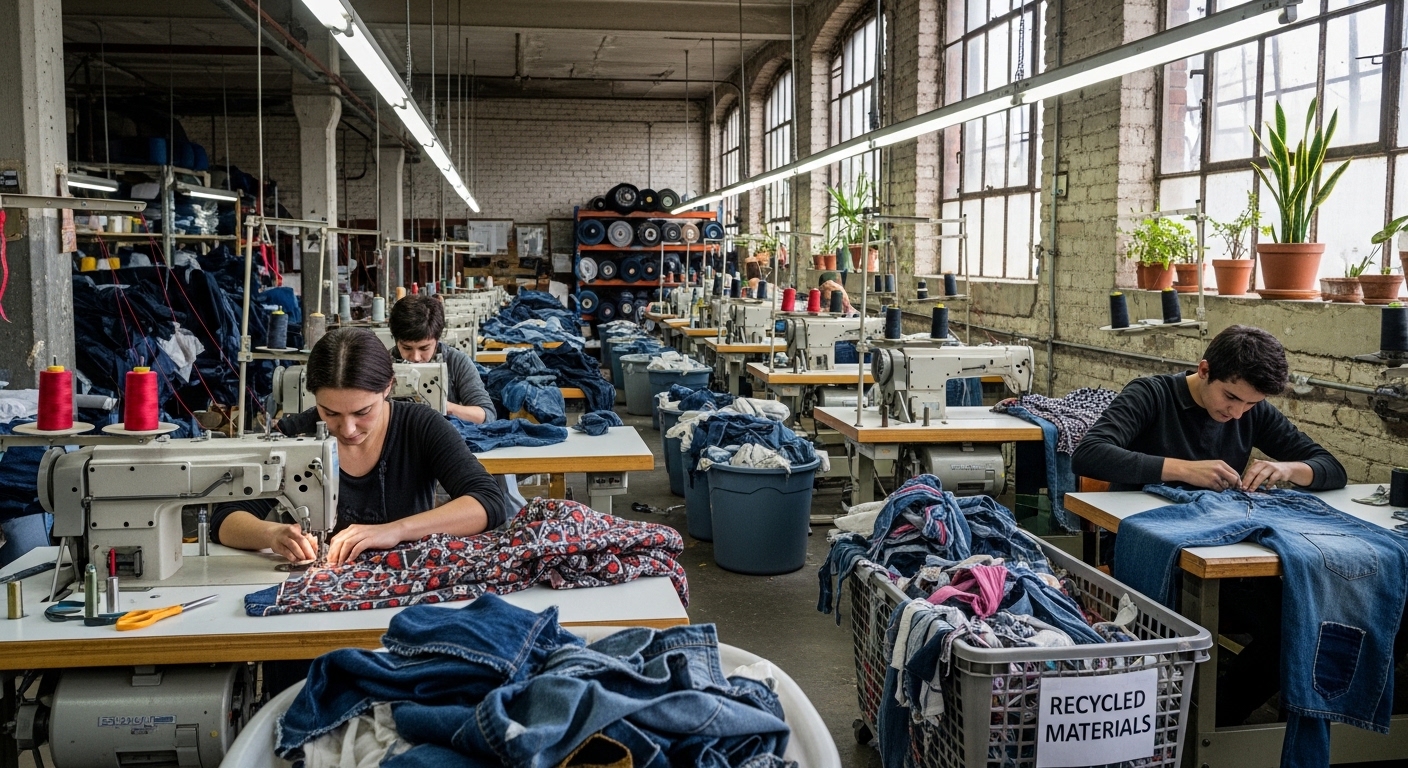
• More expensive manufacturing—higher labor costs, better quality control
• Pattern development—fitting on real bodies, not just scaled blocks
• Brand overhead—marketing, stores, design salaries
• Profit margin
When you pay $50, corners get cut somewhere—lower-grade fabrics, simplified construction, cheaper hardware, minimized quality control. The question is whether those cuts matter for how you actually use the jeans.
For someone wearing jeans daily for physical work, the $200 pair probably delivers better long-term value. For someone wearing jeans occasionally for casual outings, the $50 pair may be perfectly adequate [citation:7].
Making the Right Choice for You
Based on all testing and research, here is practical guidance for different situations:
Daily wearers—If you wear jeans four or more days weekly for work or active life, invest in the best you can afford. Look for heavyweight denim (14+ ounces), minimal stretch, reinforced stitching, and quality hardware. The cost-per-wear over several years beats replacing budget jeans annually [citation:3].
Occasional wearers—If jeans are weekend or evening wear, mid-range options around $80-120 offer excellent value. You get good fabric and construction without paying for top-tier branding [citation:1].
Trend followers—If you buy new styles each season, budget jeans make sense. They won't last forever, but you won't want to wear them forever anyway. Just know you are trading durability for affordability [citation:4].
The sweet spot for most people appears to be the $80-120 range. This tier typically delivers quality fabric, decent construction, and reasonable hardware without the luxury markup. You get 80% of the premium experience at 40% of the price [citation:1].
Care Tips Regardless of Price
Whatever jeans you buy, care determines longevity more than initial quality. Wash less—every 10 wears unless visibly soiled. Turn inside out to protect color. Use cold water and gentle detergent. Air dry only—heat destroys elastic fibers and shrinks cotton [citation:6].
Rotate between multiple pairs to let fibers recover between wears. Repair small issues immediately before they become big problems. A loose thread stitched now beats a torn seam later [citation:3].
Some denim enthusiasts freeze jeans to kill odor-causing bacteria without washing. Bag them overnight, then air out. This works for light freshening but doesn't replace occasional cleaning [citation:3].
The relationship between price and quality in jeans exists, but it is not linear. You genuinely get more at $100 than at $40. The jump from $100 to $200 delivers diminishing returns—better, yes, but not twice as good. The real skill is identifying which features matter for your specific needs and spending accordingly.