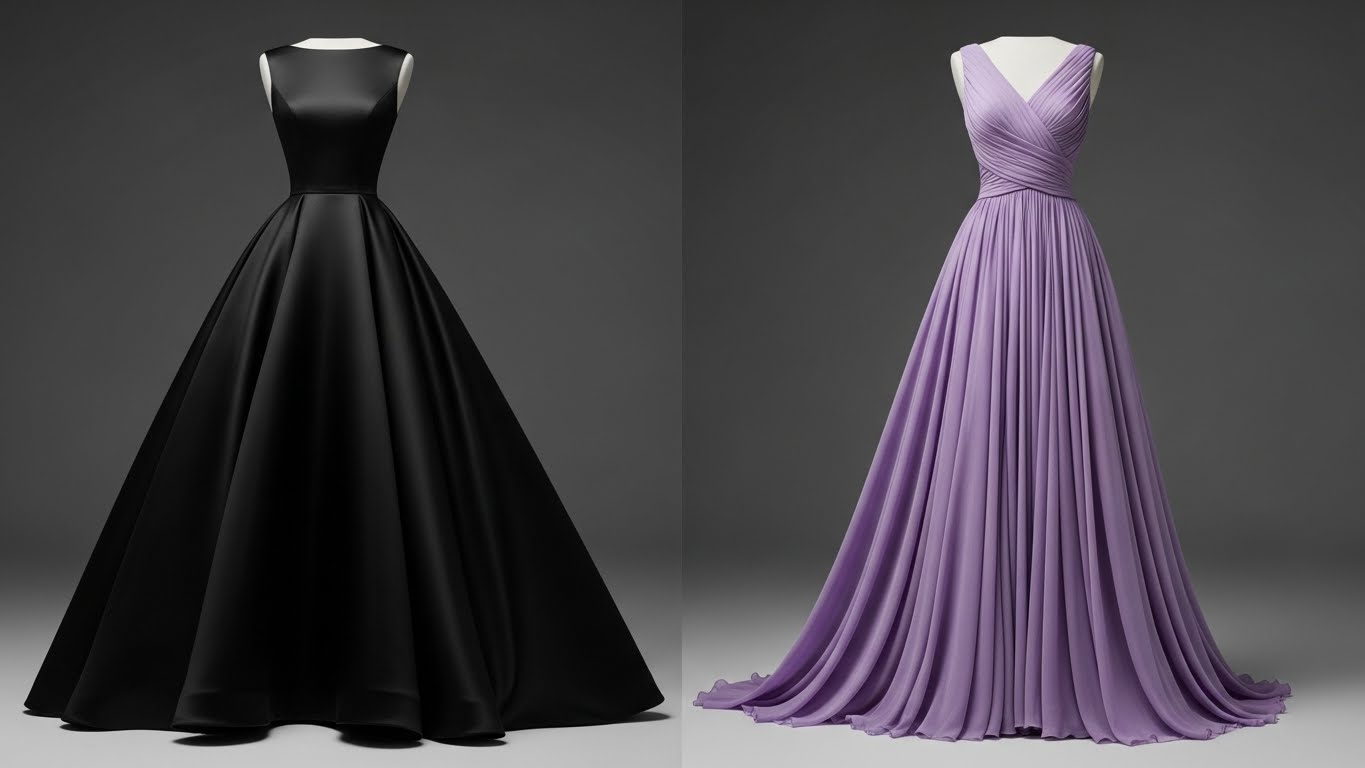
The journey of a design is a conversation between vision and material. A designer may envision a voluminous sleeve, but the fabric decides its character. A crisp cotton poplin will create a sleeve with a playful, almost architectural puff. That same volume in a lightweight wool crepe will result in a softer, more fluid drape that collapses gracefully. The fabric’s inherent properties its weight, its weave, its fiber content are the invisible hands that sculpt the final silhouette. A heavy, double-faced wool commands a sharp, minimal shape; it resists excess volume and prefers clean lines. A delicate silk georgette, in contrast, begs to be layered and gathered; it is drawn to movement and romance. The designer does not force a material into submission but collaborates with its nature, allowing the textile itself to guide the form toward its most authentic expression.
The Architecture of Textiles: From Structure to Flow
To see this principle in action, we can explore the spectrum of fabric personalities. On one end lies the family of structured materials. Think of sturdy denim, crisp taffeta, or robust canvas. These fabrics have body and memory. They stand away from the skin, creating silhouettes that are graphic and defined. A tailored trouser made from a substantial wool gabardine will hold a perfect crease and a straight leg, offering a silhouette of precision and polish. This is the realm of architecture, where garments have a clear, intentional shape that interacts with the space around the body.
Moving toward the center, we find the nurturing weights, like medium-weight jerseys, soft linens, and brushed cottons. These materials have enough body to suggest a form but enough give to follow it. They are the masters of effortless ease, creating silhouettes that are relaxed but not sloppy. A shift dress in a fine cotton knit skims the body, its shape implied rather than imposed, offering comfort without sacrificing a defined outline. Finally, we encounter the fluid fabrics: charmeuse, chiffon, silk satin, and rayon voile. These are the materials of liquid drape. They cling and flow, tracing the body's lines before falling away in soft ripples. A dress cut from silk satin will highlight the contours of the body, its silhouette changing with every step, becoming a study in dynamic, living form rather than a static shape.
Feeling Through Fiber: The Emotional Language of Material
The dialogue between fabric and form extends beyond visual silhouette into the realm of sensation and emotion. This is the feel of a garment, a quality that resonates on a deeply personal level. The tactile experience of clothing begins with the hand feel the initial impression of texture, temperature, and weight as you touch it. A rustic, nubby linen conveys casual integrity and a connection to the natural world, inspiring designs that feel grounded and organic. The cool, smooth slip of mulberry silk, however, communicates luxury and sensuality, guiding designs toward elegance and intimacy.
Furthermore, the way a fabric moves and sounds contributes to its character. The soft, almost silent whisper of high-quality cashmere as you move creates an aura of quiet luxury and inward comfort. The distinctive rustle of a taffeta skirt, however, is a performance in itself, announcing presence with an auditory crispness that matches its visual sharpness. A designer harnesses these emotional cues, knowing that choosing a textured bouclé wool over a sleek microfiber will not only change the jacket’s shape but also completely alter the narrative it tells, from tactile and artistic to sleek and futuristic.
Applying the Principle: A Mindful Approach to Your Wardrobe
This knowledge is not just for designers; it is an empowering tool for anyone who dresses. Becoming aware of how fabric dictates form allows you to make more intentional choices. When you seek a piece that holds a sharp, defined shape, you now know to look for structured materials like dense cottons, waxed fabrics, or firm wools. When you desire something that floats and flows with movement, you will gravitate toward fluid weaves like challis or crepe.
It reframes the way you shop and wear. You begin to understand why a linen blazer, no matter how well-tailored, will always have a relaxed, rumpled elegance it is the fabric’s nature. You appreciate that a sleek, body-conscious silhouette requires a material with both stretch and recovery, like a ponte knit. By listening to what the fabric wants to be, you learn to select garments that will perform and feel as you expect, building a wardrobe where every piece possesses a harmonious unity of material, form, and feeling. In the end, clothing is the meeting point of art and science, and the fabric is the medium where that beautiful negotiation takes place.